
Malang, en.SERU.co.id — Rumah Budaya Ratna (RBR) in Malang continues to uphold the tradition of literacy — the human ability to read, think, feel and create. Amid rapid technological change, artificial intelligence is accepted as part of modern life that is increasingly close to children.
RBR leader Benny Ibrahim said technological progress and culture should not be treated as opposing forces. In his view, AI can become a new space for expression as long as children do not lose the process of reading and thinking when producing work.
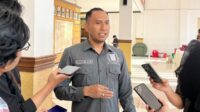
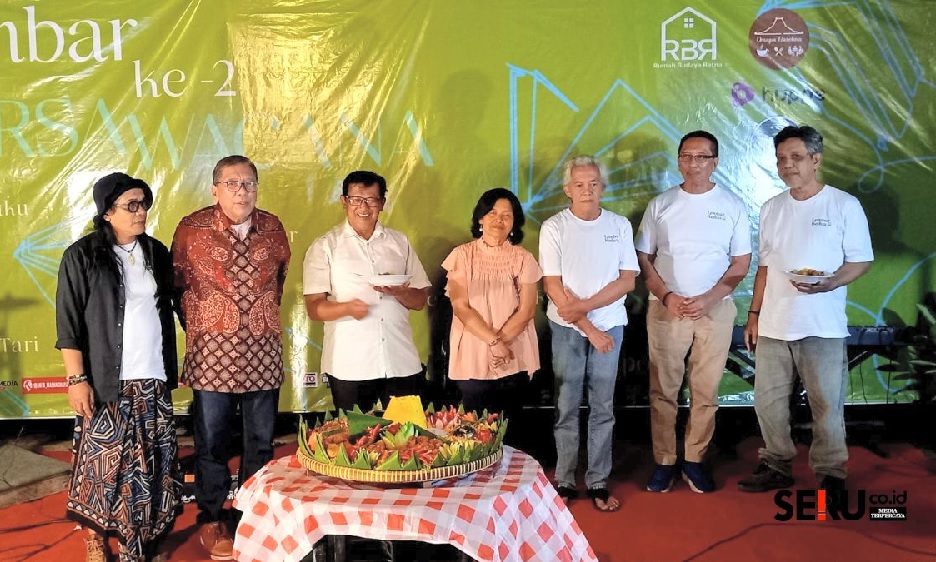
“We cannot reject technological progress. There is social media, there is AI. These can become new spaces for expression,” Benny said during the Karsa Wacana event themed “Free in Ideas, Rooted in Culture” at RBR on Jalan Diponegoro No. 3, Klojen, Malang, on Monday evening (August 24, 2026).
AI as a tool, not a replacement for reading and writing
According to Benny, AI does make writing easier. Children can use the technology to help structure various types of texts. That convenience, however, must not lead them to abandon the habit of reading or the ability to develop their own ideas.
“It is fine to write with the help of AI, but they still need to read other people’s work and write with their own meaning,” he said.
Benny believes humans possess something machines lack experience, emotion, perspective and personal taste. For that reason, AI should serve as a supporting tool rather than a substitute for people in the creative process.
“AI is a robot. Humans are stronger because they have feeling and their own taste,” he said.
The same principal guides RBR’s approach to children who are increasingly attached to gadgets and social media. The center does not try to separate children from technology. Instead, it seeks to reclaim a small portion of their attention so they can reconnect with books and writing.
Guiding children toward books, writing, art and culture
Benny described the approach as an effort to “steal” around two percent of children’s attention from the heavy flow of digital content. That small share is directed toward introducing them to books, writing, art and culture.
“If in daily life they spend 90 to 100 percent of their time with multimedia, social media or mobile phones, we only want to take about two percent of that to introduce them to writing,” he said.
RBR deliberately creates an unforced atmosphere. Children are not required to read when they arrive. They may do homework, read a few pages of a book, play guitar, sing, recite poetry or simply take photographs.
From that free space, RBR hopes interest in literacy will emerge naturally. A child who initially comes to play or complete schoolwork may gradually become curious enough to open a book, then gain the confidence to write and present their own work.
“By reading a lot, they will be able to write. That is part of our goal,” Benny said.
Remembering Ratna Indraswari Ibrahim
RBR was established on 24 August 2024 to honor and continue the legacy of the late Ratna Indraswari Ibrahim. In its two years of operation, the center has grown into an open space for literacy, art and expression accessible to many groups.
Activities range from book discussions and poetry readings to exhibitions, writing workshops, filmmaking and artistic performances. Every Wednesday features Wednesday Room for English-language activities, while an open-mic event called Kamisan is held every two weeks.
Through these programs, children are given opportunities to perform and find the courage to express their abilities. Benny noted that at least four to five children have begun showing talent in writing short stories and poetry, with some already developing their work into novels.
Technology does not automatically kill interest in literacy
For Benny, this process demonstrates that technological development does not automatically extinguish interest in literacy. The real challenge is enabling technology and culture to move forward together.
“We need synergy. Technological progress and culture should not be set against each other. Let them flow together,” he said.
Over the past two years, an average of about 30 people has visited RBR each day. Conservatively, Benny estimates around 900 readers visit each month, bringing the total to approximately 20,700 readers since the center opened.
He stressed that these figures are more than visitor statistics. Each visit is an opportunity for people to encounter books, art and culture.
The spirit of literacy fostered at RBR cannot be separated from the figure of Ratna Indraswari Ibrahim. The Malang-born writer produced at least 300 short stories during her lifetime, along with novels, novelettes, poetry, articles and essays.
Republishing Ratna’s works
To ensure Ratna’s works continue to be read by new generations, RBR has partnered with Intrans Publishing Group in Malang to reissue several of her titles.
Three works have already been republished: Bajunya Sini, Lemah Tanjung and Pecinan, Suara Hati Sang Wanita Tionghoa. RBR administrators have also discovered three previously unpublished works: Fokus (1978), Sepanjang Hidup Ratih (1990) and Seruni (1997).
Benny said preserving Ratna’s legacy is not simply about storing old works. Those works must be brought back into contact with new readers so that the spirit of reading and writing continues to grow.
“Mother Ratna’s dream was to bring forth new Ratnas. That does not mean they must become exactly like her, but rather that we nurture new people who can read and write,” he said.
More than just a place to read
The idea that RBR is more than a reading space received support from a psychological perspective. Psychologist Ade Laressa S.Psi., M.Psi. from Psikoday, who attended the event, offered her appreciation. She described RBR as having added value because it succeeds in embracing people of different ages and communities.
Children, young people and older adults all feel comfortable at RBR. They come not only to read but also to interact, create and build relationships with others.
“Rumah Budaya Ratna is truly inspiring. It is not merely a cultural house but also a place that gathers and embraces communities from various backgrounds,” Ade said.
She noted that spaces like RBR have relevance to psychology because the discipline studies human behavior. When literacy is combined with social interaction, art and creative activity, the space can offer a broader experience for the public.
Read Also:
East Java Governor Opens Sekolah Rakyat Terintegrasi in Malang to Fight Poverty Through Education
“In the world of psychology, as long as there are people involved, it will be connected to psychological science. Psychology is the study of human behavior,” she said.
According to Ade, this becomes even more relevant amid growing needs for mental health education. Society requires spaces that not only provide information but also allow people to interact and feel accepted.
For that reason, she sees RBR’s concept as a source of inspiration. The cultural house succeeds in bringing together literacy, art, community and cross-generational interaction in one place.
“I have not found many cultural houses that can embrace such a wide range of people like this. Community support is also strong,” she said.
Ade expressed hope that the concept can develop further and inspire other regions. Ratna Indraswari Ibrahim’s legacy, she added, holds important value for Malang and for Indonesian literature.
“Bu Ratna was highly influential, especially in Malang and across Indonesia. She was known nationally and her works are outstanding,” she said. (ws15/rhd)