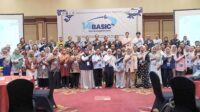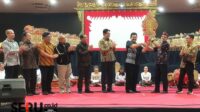

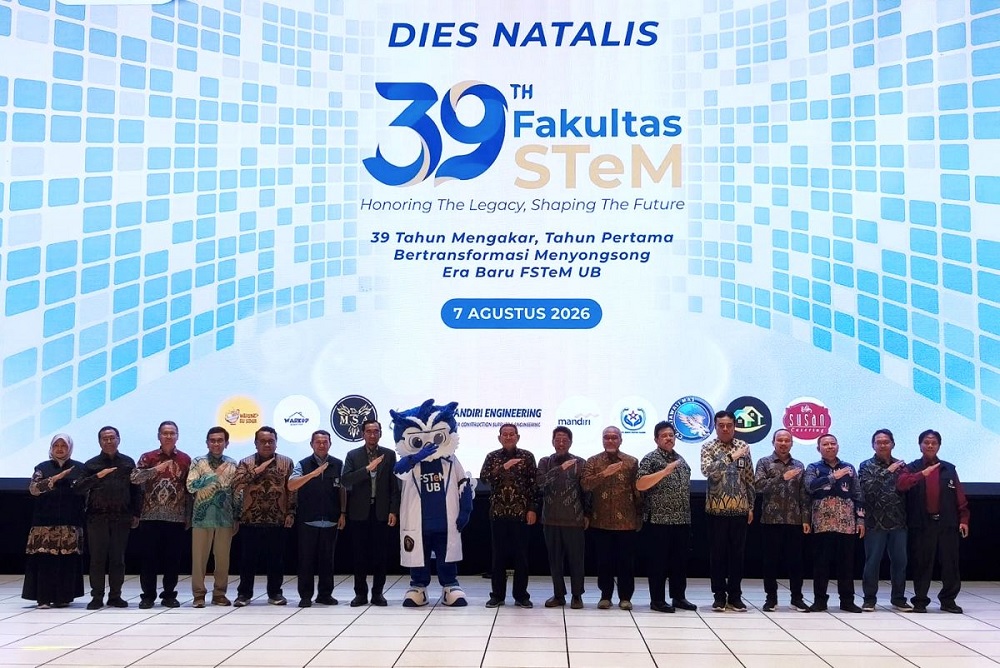
Malang, en.SERU.co.id – Universitas Brawijaya has officially launched the Faculty of Science, Technology, and Mathematics (FSTeM) as the new identity of the former Faculty of Mathematics and Natural Sciences (FMIPA). The grand launching took place during the faculty’s 39th Dies Natalis under the theme “Honoring the Legacy, Shaping the Future.”
The event marked both 39 years of established roots and the first year of transformation toward a new era for FSTeM UB.
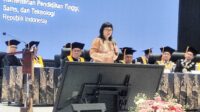
Rector Prof. Widodo, S.Si., M.Si., Ph.D., Med.Sc., stressed that the change goes far beyond a simple name update. He described it as a pivotal step to strengthen the integration of science, technology, and artificial intelligence in response to rapid advances in knowledge and technology.
“This is not only about the name. It is also a change in spirit across education, research, and scientific development,” Prof. Widodo said at Gedung Pandita Majapahit UB on Friday, 7 August 2026.
Science and Technology Combined with AI
He noted that basic scientific progress moved relatively slowly from the first to the third industrial revolutions. In the era of Industry 4.0, however, technology advances at high speed, and artificial intelligence has become central to learning and work.
“AI makes work and learning easier and more efficient. That efficiency accelerates the growth of knowledge and brings science and technology closer together,” he explained.
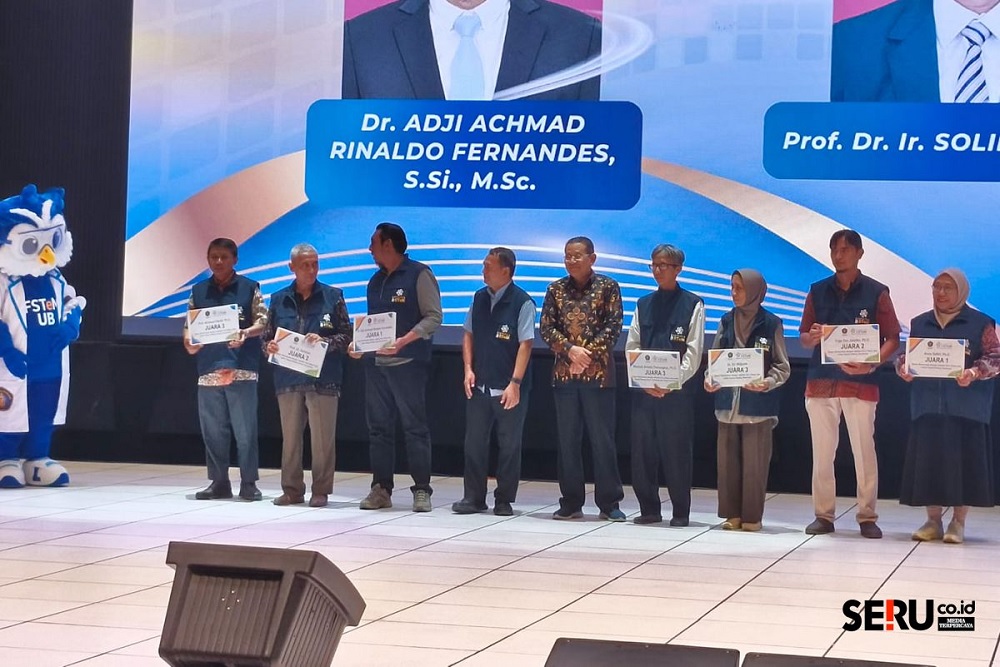
While some worry that AI might reduce students’ motivation to learn, Prof. Widodo argued the opposite. When science and technology are combined with AI, learning becomes more efficient and new innovations emerge faster.
“AI does not replace the learning process. It supports efficiency so that knowledge can advance and innovations can appear more quickly,” he said.
Interdisciplinary Approach to Science and Technology
He called for science and technology to stay closely linked in everyday practice. Bioinformatics, which merges biology with information technology, serves as one clear example. Similar connections can be built across chemistry, mathematics, statistics, and other fields.
“The challenge is to design curricula and help students understand both the fundamentals and their applications. We need stronger collaboration so each program can respond specifically to society’s needs,” he added.
Integrated Curriculum at FSTeM
Prof. Widodo emphasized that FSTeM must develop a more integrated curriculum linking basic science with practical application. Students of science should grasp how their knowledge is used, while those studying technology should understand the scientific foundations. This approach, he said, will speed up scientific progress.
Through the transformation, Universitas Brawijaya hopes FSTeM will produce adaptive and innovative graduates ready to face technological change, including the use of artificial intelligence in education and research.
“The name change must be followed by a change in mindset. Departments that once worked separately must become more integrated so students and researchers can collaborate across disciplines,” he concluded.
Behind the Transformation from FMIPA to FSTeM
Dean of FSTeM UB, Prof. Sukir Maryanto, S.Si., M.Si., Ph.D., described the shift from FMIPA to FSTeM as a strategic move that expands the faculty’s role without abandoning its scientific roots built over nearly four decades.
“This 39th Dies Natalis is special because we are still in the middle of the transformation from MIPA to FSTeM. We want to make clear that MIPA will never be forgotten. Instead, it remains the foundation that strengthens our journey into the new era,” he said.
The Theme Honoring the Legacy Shaping the Future
The theme “Honoring the Legacy, Shaping the Future” reflects the faculty’s commitment to remember its history while preparing for a more adaptive future. FSTeM has adopted the philosophy of a vest as its symbol—dynamic, adaptive, and forward-looking—representing its ability to embrace multiple disciplines.
The faculty currently offers 10 undergraduate programs that combine five basic science fields inherited from FMIPA with five applied science fields focused on technology development and research commercialization.
“Adding the word ‘technology’ to the faculty name affirms that we do not focus only on basic science. We also push for the practical application of research, so it brings real benefits to society,” Prof. Sukir explained.
FSTeM Transformation Expands National and International Networks
The transformation is accompanied by more dynamic governance and stronger global research collaboration. FSTeM continues to expand its national and international networks. Partners include institutions from Japan that have placed research equipment at the UB Observatory in Cangar as part of ongoing scientific cooperation.
“We will keep strengthening internationalization through research collaboration, international funding, and strategic partnerships. This transformation also requires more adaptive, dynamic, and visionary management,” he said.
Prof. Sukir expressed optimism that the changes launched at the 39th Dies Natalis will form a solid foundation for the years ahead. He hopes that by its 40th anniversary, FSTeM will already demonstrate new achievements as a leading center for science and technology development. (rhd)
Indonesian Version:
Grand Launching FSTeM Identitas Baru Transformasi FMIPA dalam Dies Natalis ke-39