
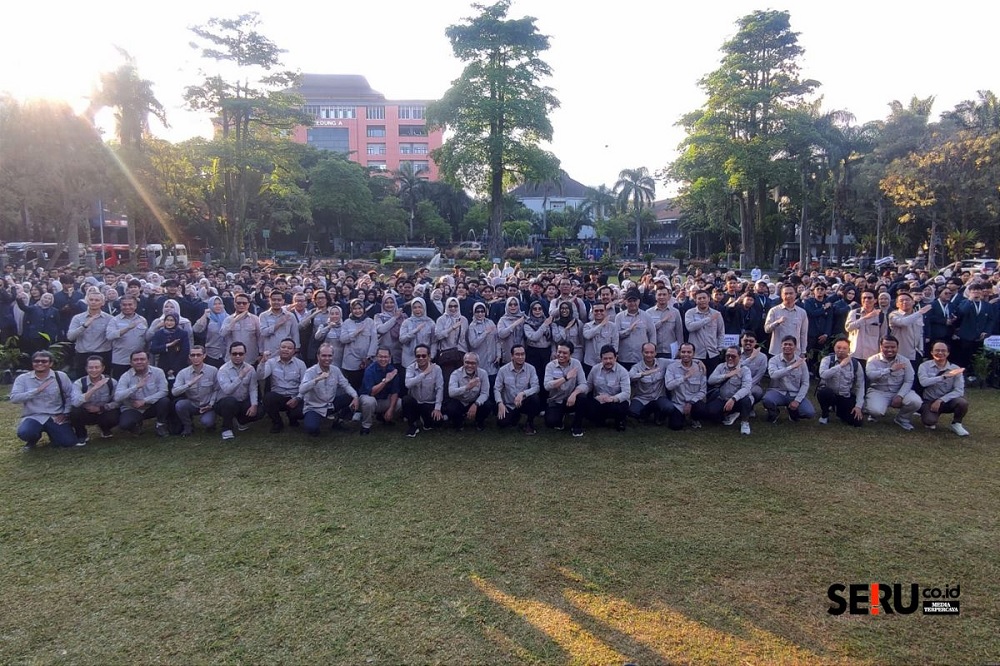
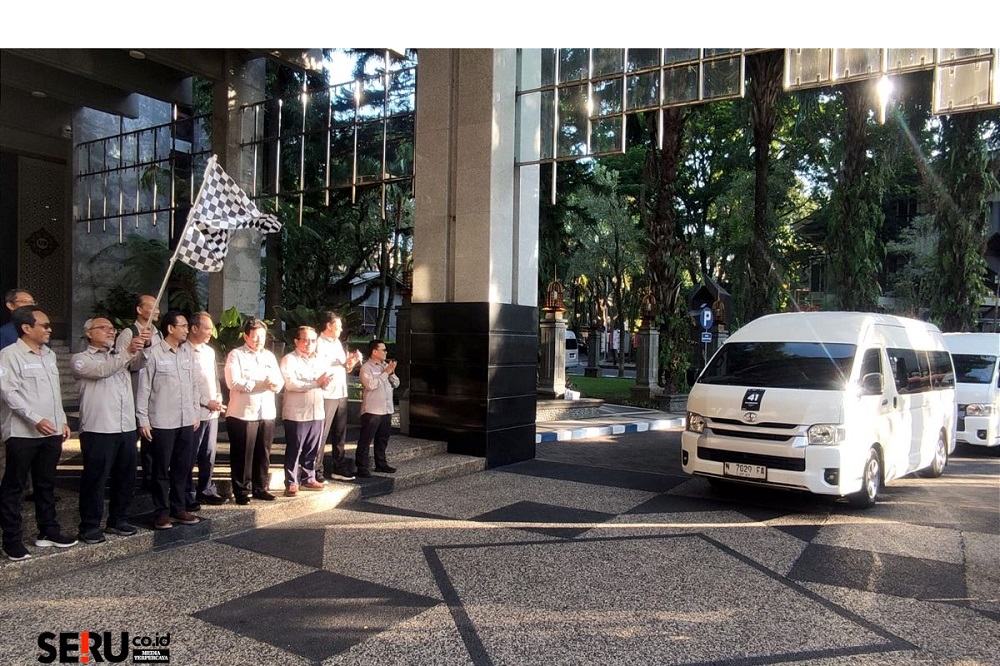
Malang, en.SERU.co.id — Universitas Brawijaya (UB) has dispatched 1,000 students for the 2026 Mahasiswa Membangun Desa (MMD) program, sending them to 76 villages spread across 32 sub-districts in eight East Java regencies.
The students, drawn from 15 faculties and accompanied by 38 supervising lecturers, will spend the next month—from July 6 to August 6, 2026—living and working directly in the communities.
Rector Prof. Widodo described MMD as far more than an off-campus learning activity.
“It’s a platform for students to apply their knowledge, sharpen their social awareness, and strengthen their spirit of service,” he said during the send-off ceremony at the UB Rectorate field on Monday (6/7/2026).
He stressed the importance of genuine collaboration. “MMD 2026 is building stronger partnerships with various stakeholders. Village development requires collective effort, and UB aims to serve as a bridge connecting knowledge, innovation, government, business, communities, and society,” Prof. Widodo added.
The rector urged students to treat the villages as real-world classrooms. “Get to know the local customs so you can communicate effectively and create positive memories. And when you post on social media, make sure you’re sharing good things that have real impact — because you carry the good name of the university and the places you’re visiting.”
Contributing to Sustainable Development Goals
The program actively involves multiple partners, including the UB Alumni Association (IKA), UB Forest, UB Press, BMU, the National Library of Indonesia, the Ministry of National Development Planning (Bappenas), PT Pertamina Patra Niaga, Bank Jatim, and local governments.
“These collaborations expand the program’s benefits, strengthen resources, and create opportunities for student innovations to continue developing even after the one-month period ends,” Prof. Widodo noted.
He added that MMD forms part of UB’s contribution to the United Nations Sustainable Development Goals (SDGs), supporting inclusive, sustainable, and equitable development. Through the program, students are expected to help tackle poverty, improve education and public health, strengthen food security, empower local economies, promote environmental management, and build partnerships.
Ambitious Targets for Impact
Prof. Luchman Hakim, Director of UB’s Directorate of Research and Community Service (DRPM), said the 1,000 students will work in eight regencies: Malang, Blitar, Kediri, Lamongan, Trenggalek, Ngawi, Bojonegoro, and Banyuwangi.
“This year, we’re targeting more than 100 appropriate technology products (TTG) tailored to village needs, at least 38 national and international scientific articles, and over 500 media publications,” he said.
“These targets aren’t just numbers — they reflect our commitment to documenting, disseminating, and maximizing the real benefits of student activities for the wider community.”
Read Also:
FEB UB Holds LinkedIn Personal Branding Seminar for Graduates and Alumni
Several targeted partnerships are underway:
- With the National Library of Indonesia: Literacy-focused activities in 33 locations across Malang, Blitar, Lamongan, and Kediri regencies.
- With the Ministry of National Development Planning (Bappenas): Poverty alleviation initiatives in eight villages in Malang and Ngawi.
- With PT Pertamina Patra Niaga: Empowerment of MSMEs and sustainable environmental management in two villages — Kalipuro in Banyuwangi and Karangduren in Malang.
“These collaborations show that village development truly requires joint efforts from universities, government, businesses, communities, and society. UB’s presence alongside these partners brings important energy to make the MMD program more tangible, measurable, and sustainable,” Prof. Luchman said.
The students departed with high hopes of delivering meaningful contributions while learning valuable lessons from the ground up. (rhd)