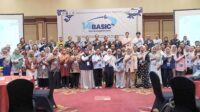

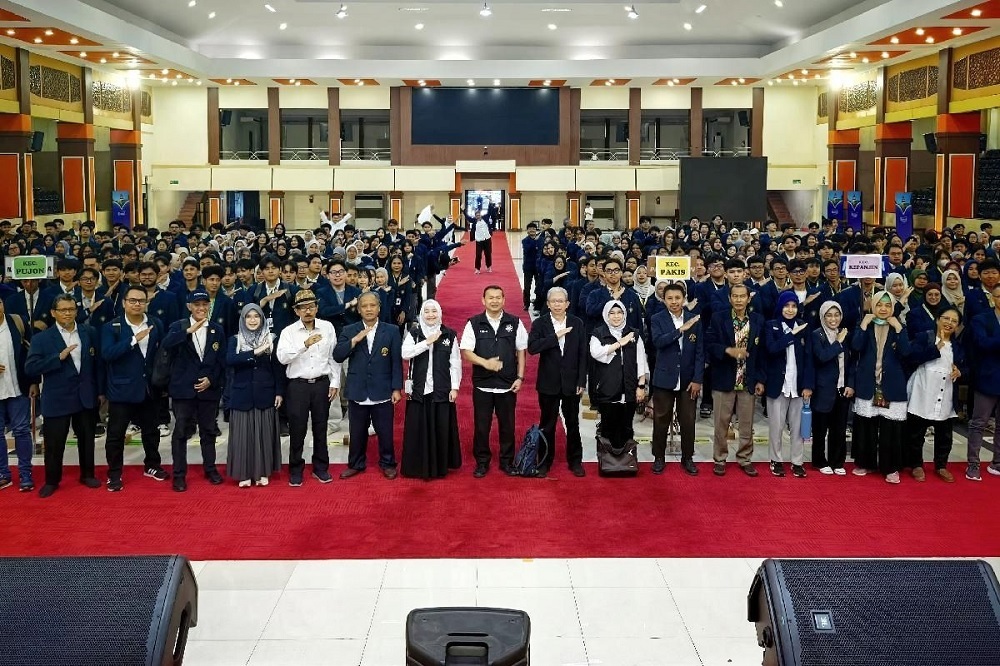
Malang, en.SERU.co.id — Universitas Brawijaya’s Faculty of Science, Technology, and Mathematics (FSTeM) has deployed 578 students for its 2026 Regular Community Service Program (KKN) across 40 villages in Malang Regency.
The students will spend the next month from June 22 to July 18, 2026, living and working directly in the communities, putting their academic knowledge into practice.
FSTeM Dean Prof. Ir. Sukir Maryanto, S.Si., M.Si., Ph.D., emphasized that the program is far more than a curriculum requirement.
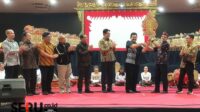
“KKN is a crucial opportunity for students to apply science, technology, and mathematics in real social settings. We hope the innovations they bring will act as catalysts for sustainable local development while they maintain the university’s good name through respectful adaptation to community life,” he said during the send-off ceremony at the Samantha Krida building on Monday, June 22.
This year’s program carries the theme “Science and Technology Innovation for Sustainable Regional Development.” It centers on five key SDGs:
- No Poverty (SDG 1)
- Good Health and Well-being (SDG 3)
- Quality Education (SDG 4)
- Decent Work and Economic Growth (SDG 8)
- Partnerships for the Goals (SDG 17)
Prof. Dr.rer.nat. Abdurrouf, S.Si., M.Si., head of Research, Innovation, Community Service, and Cooperation at FSTeM (known familiarly as Prof. Rouf), explained the strategic focus.
“The main goal is to identify and measure internal community factors from human resource capacity and economic conditions to village support systems to improve education quality, environmental health, public health, and creative economy. We want to apply scientific approaches that are practical and directly beneficial to local residents,” he said.
Read Also:
UB Deploys 856 Students to All 57 Kelurahan in Malang with Innovative Technologies
Strategic Placement Across Diverse Areas
The 578 students have been evenly distributed across 40 villages in nine strategic sub-districts: Jabung, Lawang, Pakis, Pujon, Kepanjen, Ngajum, Tajinan, Tumpang, and Turen.
Examples include Sidomulyo, Slamparejo, and Argosari in Jabung; Srigading and Sumber Porong in Lawang; and Asrikaton and Sekarpuro in Pakis.
The placement was deliberately designed to match the students’ science and technology expertise with the varied socio-geographic characteristics of the areas from agropolitan zones and creative industry centers to tourism-supporting regions.
Students are required to develop multidisciplinary work programs tailored to each village’s real needs. Activities include:
- Digitalizing village administration
- Strengthening science literacy through informal education
- Mapping community sanitation independently
- Applying appropriate technology and mathematical modeling to boost production efficiency and digital competitiveness for local MSMEs
Success will also depend heavily on strong partnerships with village officials, community leaders, and local cadres.
For the students, the program builds genuine empathy and social responsibility. For Malang Regency communities, it brings fresh skills, knowledge, and practical support aimed at greater self-reliance in public health and sustainable economic growth. (rhd)