

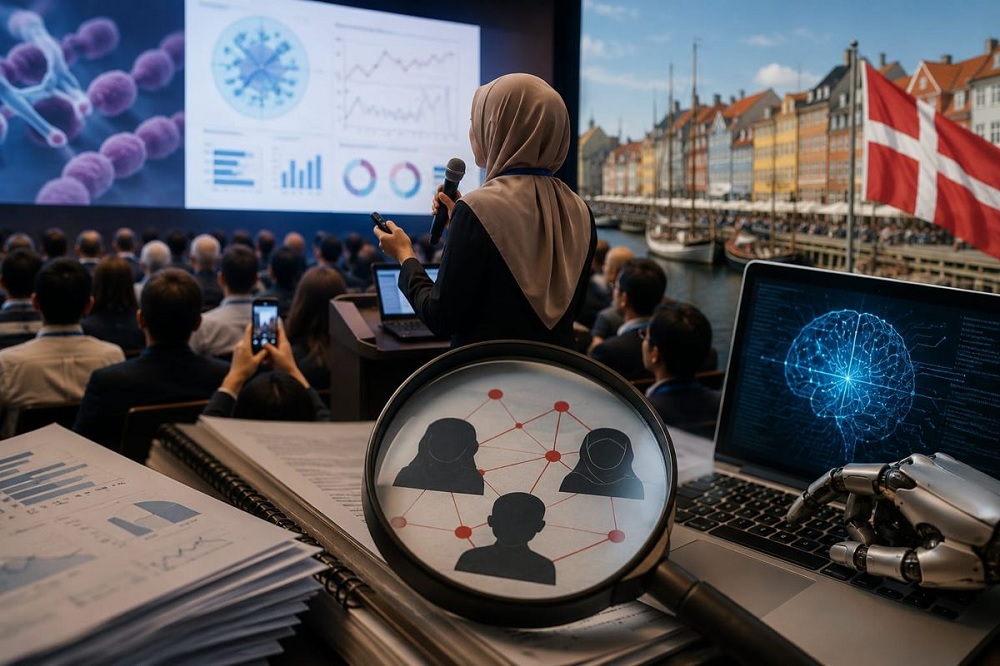
Jakarta, en.SERU.co.id — Allegations of research falsification by several Indonesians at the ISPPD 2026 international conference in Denmark have drawn widespread attention and concern among academics.
Higher Education, Science, and Technology Minister Brian Yuliarto stated that the individuals involved are not registered as active lecturers or researchers at any Indonesian universities. The ministry is now conducting a thorough investigation into the suspected breach of academic integrity, which could harm Indonesia’s global research reputation.
“We must be careful and carry out objective verification before drawing any final conclusions. The government is still investigating their status and any possible affiliations with Indonesian universities or research institutions,” Brian said on Wednesday (27/5/2026).
He emphasized that, based on initial information, the people in question are not active academics within the national higher education system. However, the case still warrants serious attention as it risks affecting the overall perception of Indonesia’s research ecosystem.
The controversy first surfaced after Ida Bagus Mandhara Brasika, a researcher from Udayana University, publicly raised the issue on Threads. He alleged that several Indonesian participants presented research that was never actually conducted, using fabricated data and heavy reliance on AI without proper scientific validation.
Mandhara also claimed there was identity manipulation during the presentations. According to his findings, one person allegedly appeared multiple times under different names by changing her hijab and name tag.
“Several Indonesians were caught carrying out organized falsification in front of thousands of scientists worldwide,” he wrote.
As a prestigious global forum on pneumonia and pneumococcal disease, the ISPPD scandal has raised fears of long-term damage to Indonesian academics’ access to international platforms.
“The impact is fatal. Indonesia’s credibility is now in question,” Mandhara warned.
Read Also:
Among those named are Rifaldy Fajar, Prihantini, and Rini Winarti. In response, Rifaldy and his team issued an apology for the controversy. They admitted to errors in using institutional affiliations and presenting their identities.
They described themselves as independent researchers in the fields of mathematics, computational science, data science, and biomedical research. While acknowledging the use of AI for exploring methods, brainstorming, coding assistance, and idea development, they denied that their entire research was automatically generated by AI.
The group also apologized for listing several institutions — including Institut Teknologi Sepuluh Nopember, Universitas Negeri Yogyakarta, Institut Teknologi Bandung, and others — without official permission. They noted that much of what they presented were abstracts and preliminary work.
The Education Fund Management Institution (LPDP) confirmed that Prihantini is one of its 2022 alumni and said it is investigating the alleged violations. Meanwhile, Universitas Negeri Yogyakarta confirmed that two of the names match its alumni records but has not yet verified if they are the same individuals.
The case has sparked broader questions about academic integrity oversight in Indonesia, particularly amid the rising use of AI in research. While formal mechanisms exist through university research bodies, the ministry, and BRIN, significant gaps remain in monitoring independent researchers and the validity of international conference submissions.
This incident highlights how the pressure to accumulate conference certificates and publications sometimes overshadows actual scientific quality. (aan/mzm)