

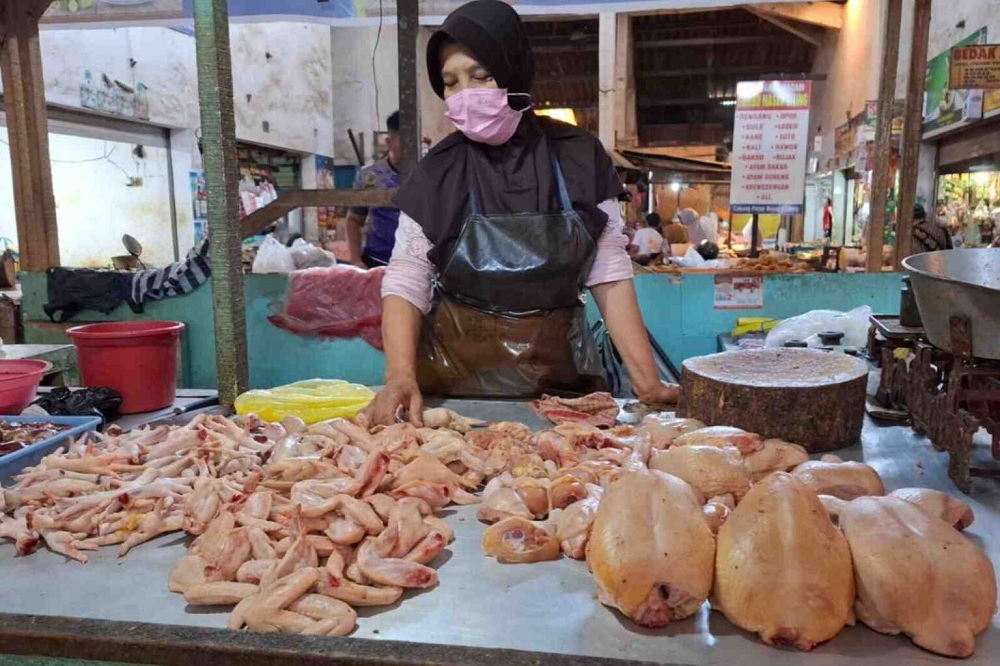
Malang, en.SERU.co.id — Chicken prices in Malang Regency have fallen noticeably over the past week, while tofu and tempeh vendors are quietly reducing portion sizes to cope with rising costs. Yet despite the cheaper chicken, overall demand remains weak as people’s purchasing power continues to decline.
At Pasar Kepanjen, chicken seller Tunik said the price of whole chicken has dropped steadily. It stood at Rp34,000 per kilogram the previous week, fell to Rp32,000 three days ago, and hit Rp30,000 on Tuesday (9/6/2026).
“Today it’s down again to Rp30,000 per kilogram,” Tunik said.
Even with the lower prices, sales have slumped. Tunik used to sell around 25 kilograms a day but is now moving only 10–12 kilograms.
“Normally it would all be gone by the end of the day. Lately, I’m lucky to sell half of that,” she added.
According to Tunik, both the price drop and sluggish demand began after the recent Eid al-Adha holiday.
Nearby, tempeh and tofu seller Widyawati said she has had to shrink the size of her products to offset the high cost of soybeans. Her selling prices remain the same — tempeh bought for Rp6,000 and sold for Rp7,000, tofu bought for Rp11,000 and sold for Rp12,000 — but the portions are noticeably smaller.
Read Also:
Rupiah Weakens to Rp18,049 Against US Dollar, Indonesia Moves to Stabilize
Like the chicken vendors, she has also seen a sharp drop in sales. The market feels much quieter than before, she said. When goods don’t move at the stall, she takes them to nearby Islamic boarding schools (pondok pesantren) to recover her capital.
Local resident Indah from Desa Kedungpedaringan, Kepanjen, said she understands why the portions are smaller. With soybeans being imported and the rupiah weakening, raw material costs have risen.
“Tempeh and tofu are still the cheapest source of protein, so I keep buying them. I don’t mind the smaller size as long as the price of soybeans is going up,” Indah said.
The situation reflects broader pressure on households in the region, where everyday staples are becoming harder to afford even as some prices ease. (wul/ono)