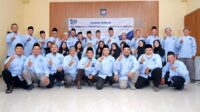


Malang, en.SERU.co.id — The East Java provincial government is using National Family Day 2026 as a chance to put families at the center of efforts to raise high-quality human resources. Officials say closer teamwork between government programs and households is essential, especially to address the province’s fatherless rate of around 25 percent.
Vice Governor Emil Elestianto Dardak said the government has a duty that goes beyond public services and infrastructure. It must also help create capable future generations by reinforcing the family unit.
“Families are the most important unit and they need the government’s presence. We have many programs now, including free nutritious meals. These have to work hand in hand with the families that exist,” Emil said.
He called on every part of society to join forces in building family resilience as the foundation for better human capital.
Shodiqin, head of the National Population and Family Planning Board (BKKBN) representative office in East Java, noted that responsibility for children’s growth and family health still falls mostly on mothers. Fathers’ involvement, he stressed, is just as critical.
The fatherless figure of roughly 25 percent does not always mean a child has lost a father. More often it reflects limited engagement in parenting and daily attention.
“In East Java the fatherless phenomenon stands at about 25 percent. Many children have a father physically present, yet receive little care or guidance from him,” Shodiqin said.
The government is therefore promoting greater awareness among fathers. Shodiqin described the father’s role as far more than providing income. Fathers help shape character, offer emotional protection, and play a frontline part in preventing stunting and early marriage.
Read Also:
Malang Journalists March Against ‘Londo Ireng’ Stigma
“Families must serve as the main shield ensuring that children, teenagers and young people grow into healthy individuals with strong character and the adaptive skills needed for an increasingly digital world,” he said.
To support this goal, authorities have prepared five flagship programs: Tamasya (a child-care park initiative), Gatrayu (the Exemplary Father Movement), SIDAYA (empowered elderly), Genting (foster-parent movement against stunting), and Super At (family counseling).
Shodiqin hopes all 38 districts and cities in East Java will adopt the programs. So far, they operate in only six areas: Malang Regency, Gresik, Bojonegoro, Kediri, Probolinggo City and Surabaya.
East Java has also received Rp285 billion in special allocation funds for family planning, distributed across the 38 local governments. Absorption currently stands at just 26.23 percent.
“We ask for the support of regents, mayors and related agencies so this budget is used more quickly. East Java is still below the national average,” Shodiqin said. (wul/ono)
Indonesian Version:
Fenomena Fatherless di Jatim Capai 25 Persen, Penguatan Peran Ayah Jadi Prioritas