
Jakarta, en.SERU.co.id – The head of the National Nutrition Agency (BGN) has confirmed the realization of 21,801 motorcycles to support the operational needs of the Free Lunch Program (MBG). Ironically, this procurement is proceeding amid the government’s strict budget efficiency measures, sharply reduced salaries for honorary teachers, and widespread work-from-home policies already in place across central and regional agencies.
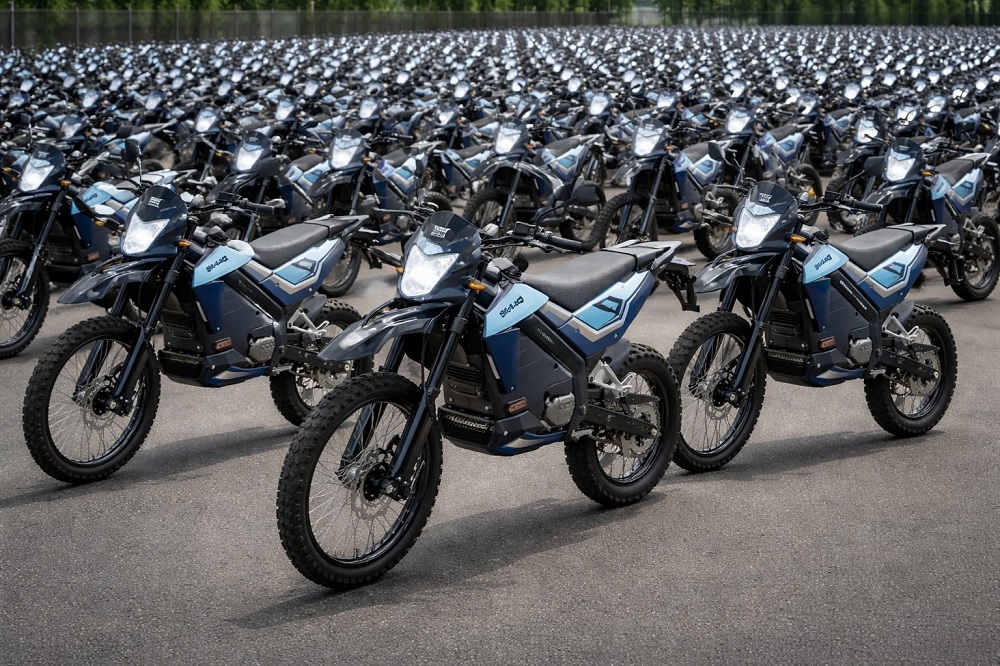
National Nutrition Agency head Dadan Hindayana confirmed that the procurement of operational vehicles for the MBG program has indeed been carried out. A total of 21,801 electric motorcycles have been secured out of the planned 25,000 units budgeted for 2025.
“These motorcycles are intended for heads of the School Nutrition Implementation Units (SPPG) to support distribution and field operations,” Dadan said, as quoted by CNN Indonesia on Tuesday (7/4/2026). “However, they have not yet been distributed because they must first undergo the formal registration process as State-Owned Assets (BMN).”
The MBG program remains a top priority under President Prabowo Subianto’s administration. Prabowo has repeatedly stressed that the initiative will not be halted, despite mounting pressure on the state budget from escalating conflicts in the Middle East.
He has emphasized that the ongoing efficiency drive is not aimed at cutting strategic programs, but rather at eliminating potential leaks and wasteful spending. The government claims to have already saved Rp308 trillion through the elimination of ineffective expenditures.
Related Post:
Government Strategies to Rescue APBN 2026 from Oil Price Chaos
Efficiency Policies
Meanwhile, Finance Minister Purbaya Yudhi Sadewa reported that the first-quarter 2026 state budget deficit reached Rp240.1 trillion, equivalent to approximately 0.93 percent of GDP—an increase compared with the same period last year.
These conditions have triggered efficiency policies across multiple sectors, including education. The impact is already being felt by teachers in remote areas. In Kupang Regency, East Nusa Tenggara, several honorary teachers are facing harsh realities.
One of them, Agustinus, described how their monthly salaries have been slashed drastically to between Rp100,000 and Rp223,000. After more than two decades of service, he and his colleagues are now struggling to survive on incomes far below a decent living standard.
To support his family, Agustinus has had to tend a garden for additional food. He also faces a grueling daily commute, hitchhiking on passing vehicles from the early morning hours just to reach his school. (aan/rhd)