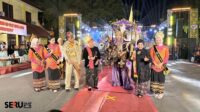


Batu, en.SERU.co.id – The batik craft industry in Batu City, East Java, has one of its local pride icons named Batik Olive. Founded by H. Iwan Airawan, SE, the business is a tangible expression of deep love for the nation’s cultural arts that continues to innovate while keeping pace with the times.
Starting from a love of the art of batik making in 1995, Iwan Ahmad Airawan pioneered the business on a small, home-based scale. Through hard work and perseverance, the enterprise continued to grow until it finally obtained official legality in 2000. Since then, the name Batik Olive has become widely known for its distinctive character.
“The main advantage of Batik Olive lies in the characteristics of classic batik combined with a new innovation in the form of embroidery on hand-drawn batik,” said Pak Iwan, as he is commonly addressed.
Iwan explained that this artistic combination has successfully created a unique identity and distinctive feature for Batu City batik. Thanks to that innovation, Batik Olive has been able to endure across time and continues to be well received by the public and consumers throughout Indonesia. For his high dedication in preserving ancestral heritage, H. Iwan Airawan was awarded the prestigious Upakarti Award in 2009 by the President of the Republic of Indonesia at the time, Susilo Bambang Yudhoyono.
“We once received the Upakarti Award as a form of appreciation as a cultural preserver from President SBY at that time,” he said.
In addition to prioritizing aesthetics and the quality of clothing, Batik Olive also demonstrates genuine concern for the environment through wise management of production waste. Leftover batik wax is always collected and reprocessed so that it can be reused for batik making. Not stopping there, leftover batik fabric scraps or perca are also creatively turned into various high-value accessories.
Read also:
Japanese Festival Tanoshii No Omatsuri 2026 Coming to Batu Jatim Park 3
“These batik scraps can still be made into handmade items such as necklaces, bags, and wallets,” he added.
For members of the public who wish to see and collect the products, the Batik Olive gallery is currently located at its production house on Jalan Terusan Agus Salim Gg Pesantren 2 number 5i, Temas Sub-district, Batu City. It can also be visited through its official Instagram social media account at @batikolive.kotabatu. Quite a number of people from among students, university students, corporations, and foreign tourists also learn to make batik at this place.
“Hopefully the existence of Batik Olive can become an inspiration for how tradition, modern innovation, and environmental concern can go hand in hand in advancing Nusantara crafts. Happy Batik Day,” he concluded. (dik/mzm)