
Malang, en.SERU.co.id – Universitas Brawijaya (UB) is strengthening its early detection system for student mental health through the integration of campus services, counseling, and artificial intelligence (AI).
During the “Student Mental Health Strengthening Socialization” event, UB emphasized that these efforts demonstrate the university’s concern and proactive response to the rising number of student suicides.
Rector of Universitas Brawijaya, Prof. Dr. Widodo SSi MSi PhDMedSc, stated that mental health issues are complex and often difficult to detect directly. Their impact extends beyond the individual, affecting both academic performance and students’ social lives.
“Mental health problems vary widely and are frequently not easy to recognize. Therefore, community involvement is essential for more optimal handling,” Widodo said on Tuesday (7/4/2026).
Vice Rector III, Dr. Setiawan Noerdajasakti SH MH, added that strengthening mental health is crucial in helping students cope with various pressures, including academic, family, peer, and economic challenges.
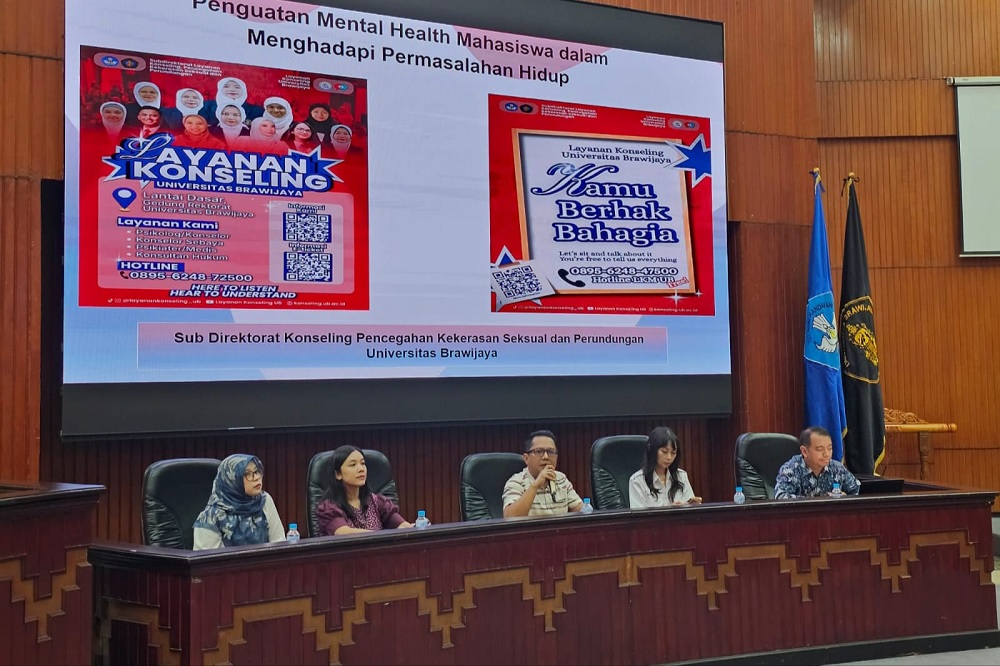
He noted that UB has provided several support services, such as the ULTKSP and e-counseling platforms, while also engaging the entire academic community to create a more responsive environment.
“We want to ensure students do not experience prolonged mental stress. This is part of UB’s commitment to supporting them,” he said.
Ulifa Rahma SPsi MPsi, Head of the Subdirectorate for Counseling, Sexual Violence Prevention, and Bullying at the Directorate of Student Affairs, revealed that the university continues to develop programs for a resilient and mentally healthy campus. Services such as e-counseling and hotlines managed by the Student Sovereignty Institution (LKM) have been prepared to provide students with easy access to help.
“We offer easily accessible services so students have a safe space to express the problems they are facing,” she explained.
From the academic perspective, dr. Frilya Rachma Putri SpKJ, Head of the Psychiatry Study Program at UB’s Faculty of Medicine, highlighted the causes of mental health crises among students. She acknowledged that these issues usually arise from the accumulation of multiple pressures, requiring a shift from a reactive to a proactive approach through early detection systems.
“A campus cannot only be reactive; it must have a ‘radar’ to read early signals before a crisis occurs. This system should cover promotive, preventive, and curative services, supported by a culture of active listening within the campus environment,” she explained.
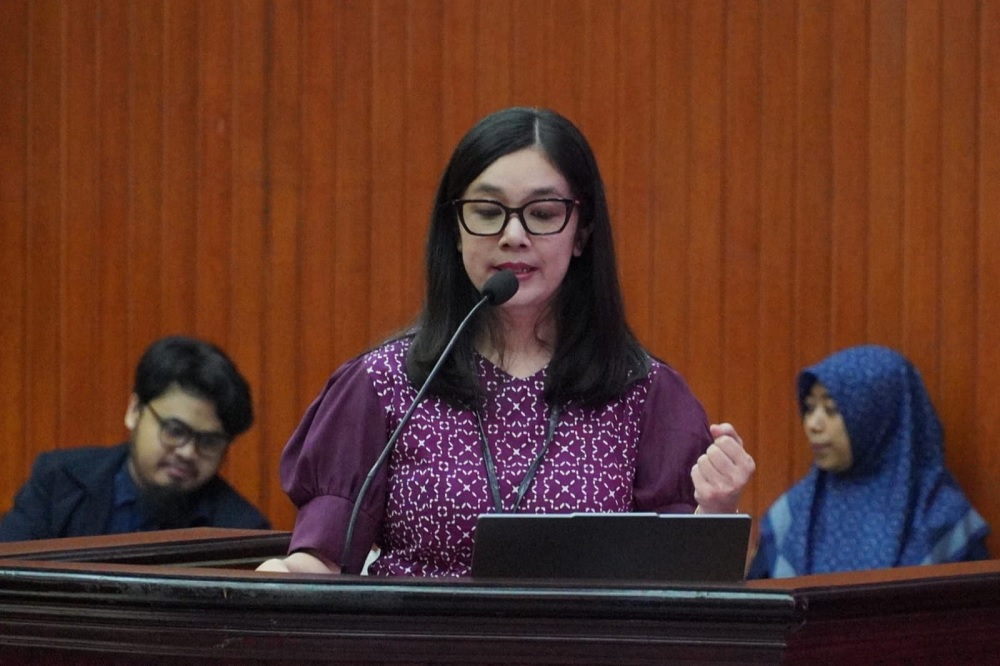
Sofia Ambarini SKom MM, Chair of the Indonesia Sehat Jiwa Program, echoed this view, stressing that mental health management must be comprehensive and involve expert support and emergency services.
“The approach cannot be partial. It must encompass promotive, preventive, curative, and rehabilitative efforts,” she added.
Meanwhile, Director of Information Technology at UB, Dr. Raden Arief Setyawan ST MT, explained that the university has developed monitoring systems through digital platforms such as SIAM and SIADO. Artificial intelligence (AI) is also being utilized to analyze student conditions more comprehensively.
“This system allows lecturers, students, and even parents to monitor academic activities related to student well-being. We are also developing AI to summarize survey results and combine them with assessments from lecturers and student affairs for further analysis,” he said.
Through this initiative, UB hopes to build a stronger and more integrated mental health ecosystem so that students can excel academically while developing mental resilience to face life’s challenges.
“UB reaffirms its commitment to creating a safe campus environment. We implement a zero-tolerance policy toward bullying and sexual violence,” the university stated. (bas/rhd)