

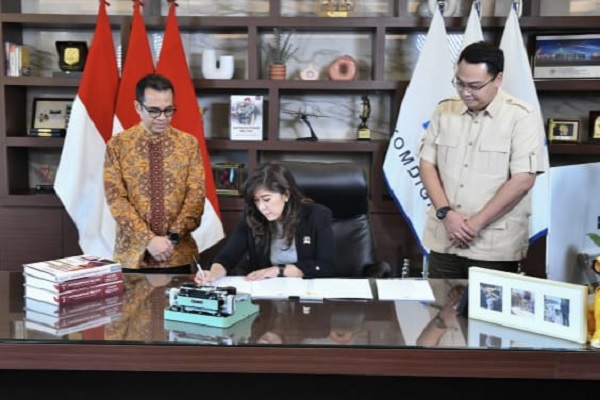
Jakarta, SERU.co.id – Indonesia is strengthening child protection in the digital space by issuing implementing regulations under PP TUNAS (Peraturan Pemerintah tentang Tata Kelola Penyelenggaraan Sistem Elektronik dalam Pelindungan Anak). Through this policy, children under 16 years old will have restricted access to several high-risk digital platforms. The rules will begin to be enforced starting March 28, 2026, as an effort to shield children from various online threats.
Minister of Communication and Digital Affairs (MenKomdigi) Meutya Hafid stated that this regulation represents a concrete step by the state, particularly to ensure Indonesian children are protected from multiple internet risks.
“Through this regulation, the government is delaying access for accounts of children under 16 on high-risk digital platforms. Including social media and networking services,” Meutya emphasized, as quoted from the official Komdigi website on Saturday (March 7, 2026).
She noted that children today face increasingly real threats in the digital world, ranging from exposure to pornography, cyberbullying, to online scams. The government is stepping in to ensure parents do not face these threats alone.
Implementation Phase Begins March 28, 2026
The government has set the policy implementation to start on March 28, 2026, with the deactivation of accounts belonging to children under 16 on platforms categorized as high-risk.
Platforms included in this category are:
- YouTube
- TikTok
- Threads
- X
- Bigo Live
- Roblox
“Implementing this policy requires adjustments from various parties. However, this step is crucial to create a safer digital space for children,” she added.
This policy positions Indonesia as one of the non-Western countries boldly taking firm action in child protection in the digital era.
“We want technology to humanize humans and support the holistic development of the young generation,” she stressed.
DPR Support: A Progressive Step to Protect Children
The policy has received support from Commission I DPR RI member Farah Puteri Nahlia. The PAN legislator views the Ministry of Communication and Digital’s move as progressive.
“This policy is not about distancing children from technology, but ensuring they enter the digital world at the right age with maximum protection,” Farah said.
In addition to access restrictions, PP TUNAS also prohibits the commercialization and profiling of children’s data by digital platforms. Violations can result in strict sanctions. Farah sees this as proof of the state’s seriousness in protecting children’s digital rights.
However, she reminded that regulations alone are insufficient without ongoing digital literacy education. She urged the government to intensify digital literacy programs, with parents as the primary target.
Business Community Calls for Careful Regulation Drafting
Head of the Digital Ecosystem Agency at the Indonesian Chamber of Commerce and Industry (Kadin), Firlie Ganinduto, believes digital regulations must be drafted fairly and practicably. According to him, regulations rushed too quickly could lead to issues.
“Such as difficulties in field implementation, business uncertainty, and hindering innovation and investment in the digital sector. The success of PP TUNAS is not measured by how quickly it is enacted, but by the effectiveness and fairness of its implementation after coming into force,” he concluded. (aan/rhd)