
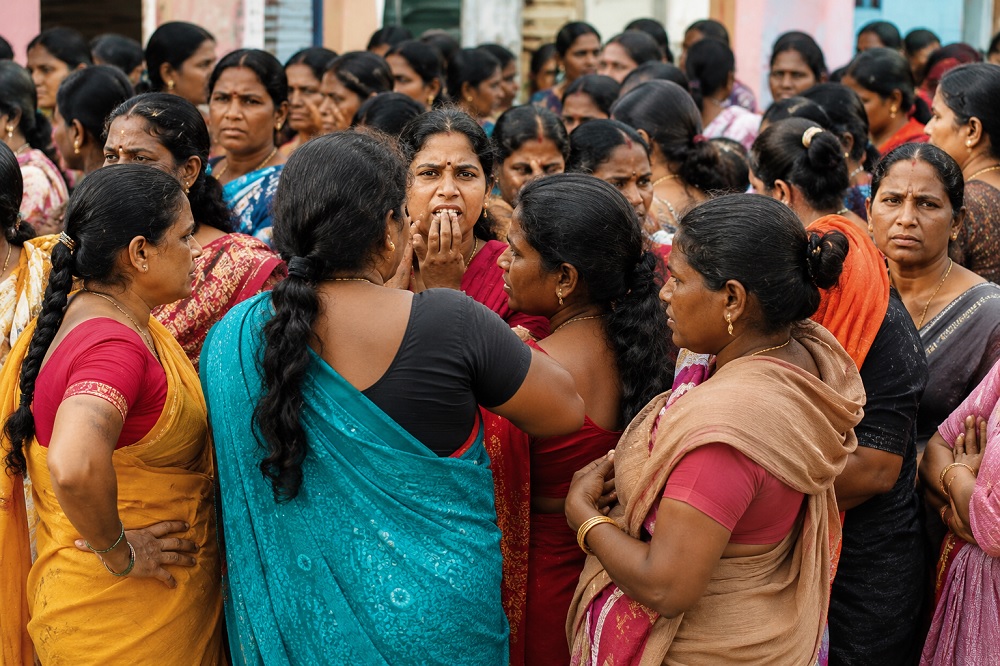
Mumbai, en.SERU.co.id — The Maharashtra government has removed more than nine million women from the Mukhyamantri Majhi Ladki Bahin Yojana, one of India’s largest state-level cash transfer programs for women. The decision followed a statewide verification exercise and the enforcement of mandatory electronic Know Your Customer (e-KYC) checks that began in late 2025.
According to government records reviewed by The Indian Express under the Right to Information Act and reported on 13 July 2026, more than 92 lakh beneficiaries were removed from the scheme. This figure exceeds the approximately 80 lakh deletions previously disclosed by the state government. As a result, the number of active beneficiaries fell from a peak of around 2.43–2.63 crore to roughly 1.5–1.7 crore.
Nearly 62 lakh of those removed, or about two-thirds of the total, were struck off because they did not complete the required e-KYC process.
Others were found ineligible because of household income, government employment, other welfare benefits, age limits, or duplicate claims.
Records also showed that nearly 29,000 men and around 8,000 government employees had received payments under the scheme.
Verification Process and Financial Scrutiny
Women and Child Development Minister Aditi Tatkare said the verification drive was launched after the new government took office.
“We decided on the exercise in August 2025… and repeatedly announced that payments of beneficiaries who did not complete e-KYC would be stopped,” she stated. The deadline for completing e-KYC was extended first to 31 December 2025 and later to 30 April 2026.
Tatkare told BBC Marathi that the fall in beneficiary numbers from 26.3 million to about 17 million should not be viewed as evidence of fraud. The scheme, launched in June 2024, provides Rs 1,500 per month directly into the bank accounts of eligible women. It became a prominent feature of the Mahayuti alliance’s campaign ahead of the 2024 state assembly elections. A post-election survey by Lokniti-CSDS found higher support for the ruling alliance among beneficiaries of the program.
The scheme has also come under financial scrutiny.
India’s Comptroller and Auditor General (CAG) reported in July 2026 that the Women and Child Development Department overspent its authorized budget by 35.41 billion rupees.
Total expenditure reached 332.37 billion rupees in the first financial year. The auditor also flagged large transfers into special accounts during the final months of the year.
Read Also:
Free Speech Groups Question Arrests Linked to Criticism of President Prabowo
Officials estimated that the beneficiaries later removed had collectively received around Rs 14,000 crore before payments were halted. The government has said it is recovering funds from clearly ineligible recipients, including men and government employees, though the amount recovered has not been publicly detailed.
In an article published on 10 August 2026, the BBC quoted Nirmala Bawaskar, a widow working as a housemaid in Sambhajinagar district, who said the monthly payment helped with medical expenses and motivated her to learn to write. “It’s money of my own. That’s what matters to me,” she said.
Welfare economist Neeraj Hatekar noted that the Rs 1,500 payment represents a significant sum for women with low and irregular incomes in Maharashtra. Economist Ajit Ranade observed that while such schemes can influence elections, their long-term impact on state finances also requires attention.
Similar unconditional cash transfer program for women is now operating across multiple Indian states and reach tens of millions of beneficiaries. The Maharashtra case has drawn attention to the challenges of large-scale enrolment, verification, and fiscal management that accompany these schemes.