
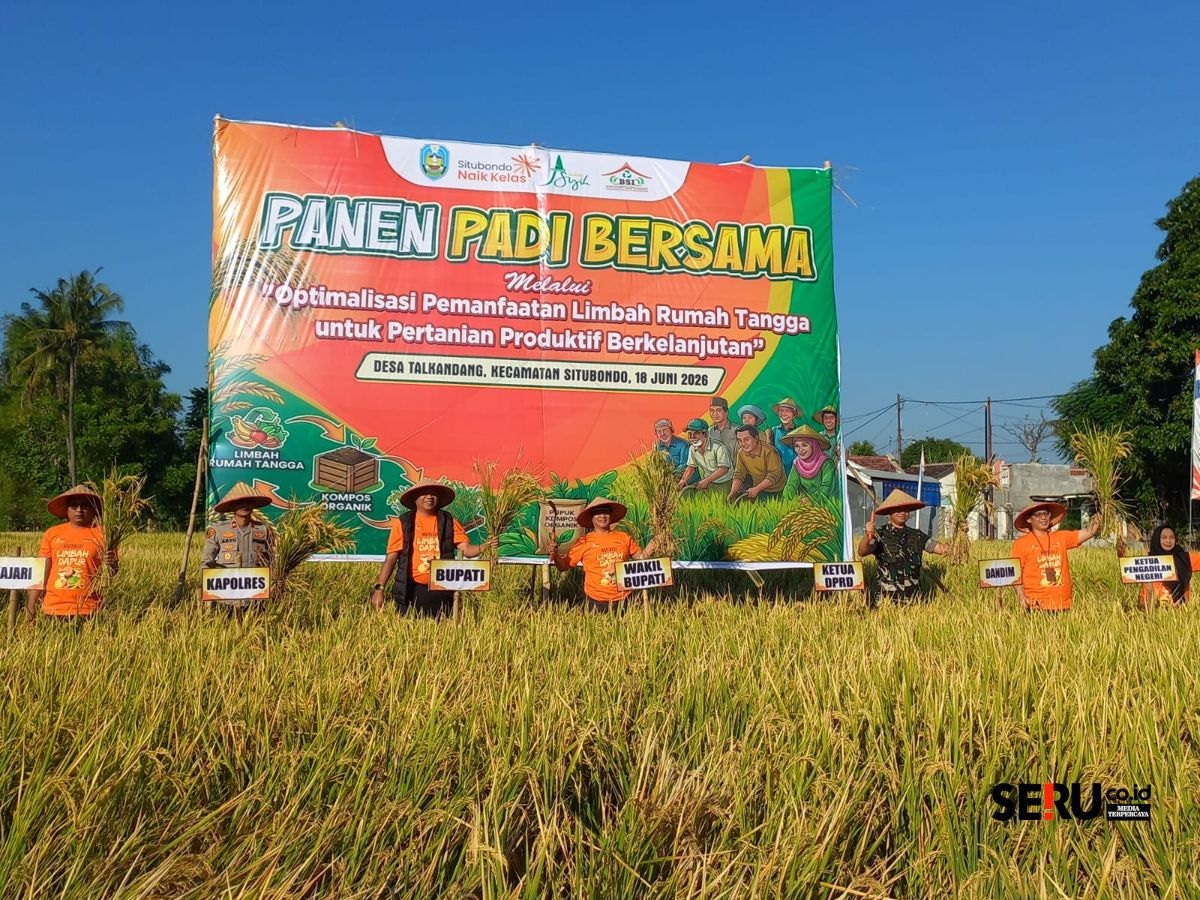
Situbondo, en.SERU.co.id — A simple innovation using liquid organic fertilizer made from kitchen waste has dramatically increased rice production in Situbondo, with yields jumping from 7.3 tons to 9.1 tons per hectare.
Regent Yusuf Rio Wahyu Prayogo, affectionately known as Mas Rio, praised the local innovators for cleverly turning an environmental challenge into a practical farming solution.
“This is an outstanding initiative from the waste-conscious community that’s also deeply involved in agriculture. They’ve found a way to tackle the garbage problem while addressing the high demand for fertilizer that farmers are currently facing,” Mas Rio said on Thursday (18/6/2026).
Field measurements confirmed the impressive results: plots using the kitchen waste-based nutrient spray achieved 9.1 tons per hectare — a significant leap from the previous average of 7.3 to 8 tons.
Beyond higher yields, the innovation delivers three key benefits for farmers: cutting chemical fertilizer use by up to 30%, shortening the growing period, and reducing overall operational costs.
Mas Rio urged other sub-districts to adopt the approach as a model.
“The benefits are clear and substantial. I want this to become a benchmark for all farmers across the region,” he added.
He also encouraged the innovators to finalize legal permits through the relevant agencies and collaborate with local academics to obtain scientific validation for the formula. The push aligns with the district’s ambitious target of achieving 500,000 tons of rice self-sufficiency by the end of 2026.
Read Also:
Oil Prices Drop After US Iran Peace Agreement Announcement
From backyard experiment to district-wide impact
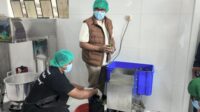
Purwanto, the innovator behind the liquid organic fertilizer, began developing the formula from household waste back in 2015. After years of trials, it was rolled out more widely this year.
The initiative has also empowered housewives in the community, creating additional economic opportunities for local residents.
According to Purwanto, the organic formula reduces spending on conventional fertilizers, protects soil health by avoiding chemicals, and consistently lifts harvests. Farmers he supports saw yields rise from around 6 tons per hectare to 8 tons, then 8.5 tons, and now 9.1 tons.
“There’s still room to improve. On my own land, we’ve reached up to 12 tons per hectare,” he said.
To achieve the best results, Purwanto offers intensive four-month mentoring, with farmers needing about 12 liters of the formula per hectare.
The journey hasn’t been easy. In the early days, locals often mistook him for a traveling salesman. He also faced bureaucratic hurdles and hopes the local government will help streamline the permitting process.
Currently, the operation produces around 500 liters per month. Rather than selling it commercially, Purwanto distributes it through Situbondo’s main Waste Bank (BSI) on a non-cash basis — rewarding members and customers for their environmental efforts.
The success story highlights how grassroots creativity can address both waste management and food security challenges in one practical package. (aza/mzm)