

Malang, en.SERU.co.id –Raising rabbits demands exceptional patience and attention to detail. From birth to market readiness, the animals require constant care—typically reaching saleable age at 2.5 months or once fully weaned and no longer nursing.
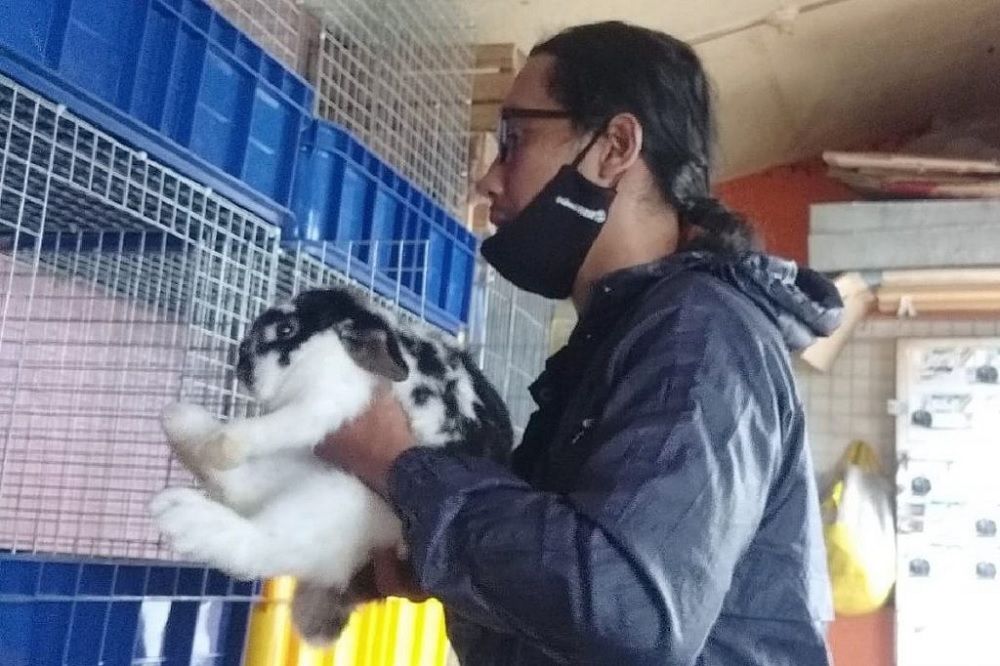
Eko Sabdianto, better known as Dian, owner of KWB Rabbitry Farm in Batu, East Java, knows this reality all too well. A breeder specializing in Holland Lop fancy rabbits, he describes the business as highly profitable yet testing.
“We can’t expect income for the first four to six months. Rabbits only reach breeding age at four to five months, or after they finish molting, before they can be mated,” he explained.
For novice breeders, the early months are a steep learning curve. They must master rabbit care, cage management, and treatment of common illnesses such as scabies, diarrhea, and bloating—problems that spike during the current rainy season. When does become pregnant, breeders must also learn how to manage pregnancy and delivery.
One critical preparation, Dian stressed, is providing a nest box for expecting mothers. “The nest box keeps the doe comfortable and stress-free until the kits are born,” he said while cleaning cages at his farm on Jalan Kelud, Gang Punden, RT 2, RW 11, Sisir Village, Batu District.
A breeder’s resolve is truly tested when losses occur—whether newborn kits, weanlings, or even the does themselves. Many beginners give up after watching their animals fall seriously ill and die despite treatment.
Dian himself hit rock bottom during a severe scabies outbreak. “I was so desperate I sold everything. But then one of my does gave birth to four healthy kits. That moment changed everything. It became my reason to keep going, no matter what,” he recalled.
Holland Lop rabbits can be harvested at 2.5 to 3 months old. High-quality show-standard weanlings fetch Rp2.5 million each at 2.5 months, while four-month-old females can sell for Rp4 million.
Read Also:
Mikutopia, Batu’s Enchanting New Destination Magnet for Families & Fun-Seekers
“Once you scale up the number of rabbits, feed costs are easily covered and even support the breeder’s daily living expenses,” said the soon-to-be-married breeder.
Dian advises beginners to expand gradually to avoid heavy losses in the first six months. Start with a few does, master the skills, and increase numbers only when confident. “If everything goes smoothly, you can start seeing real income within the next four months,” he said.
The most critical phase in rabbit breeding is parturition. When Dian started in 2014, he had no idea a rabbit’s gestation period lasts only about one month. Without a nest box, newborn kits scattered across the cage floor—some even fell through the wire—and many died from cold or lack of nursing.
“Breeding success depends entirely on healthy births. Failure at this stage means failure as a breeder,” he noted.
In the wild, rabbits give birth in hidden burrows they dig themselves. A nest box serves as a safe substitute. Inside it, the doe plucks her own fur to create a warm nest before delivering her litter.
For those willing to endure the early hardships, rabbit farming in Batu offers genuine rewards—but only to those who approach it with patience, knowledge, and an unwavering commitment. (rhd)