
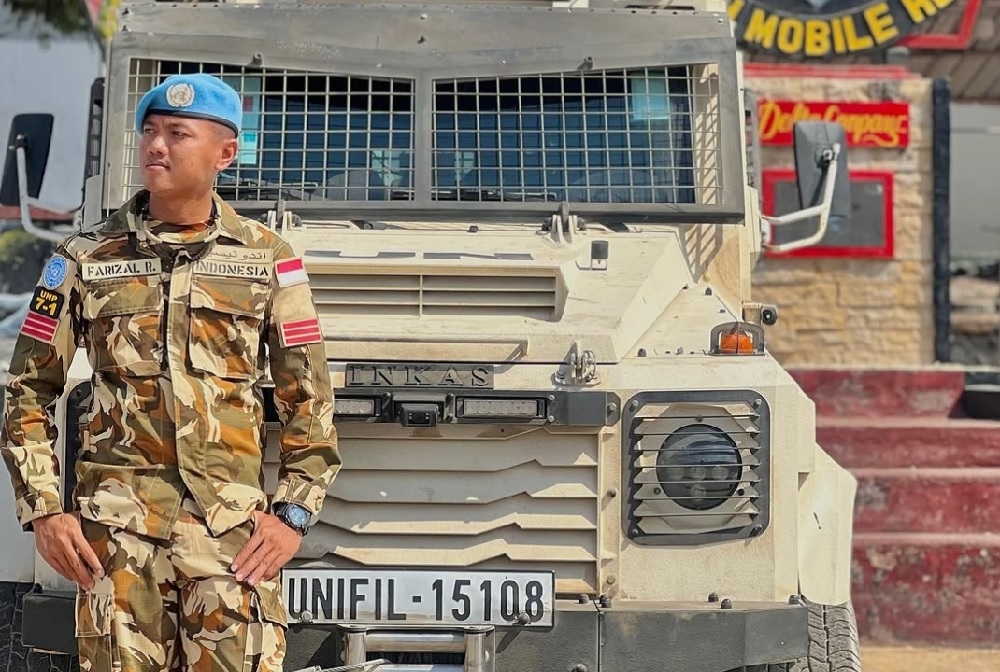
Jakarta, en.SERU.co.id – A member of the Indonesian Armed Forces (TNI) was killed while serving in a United Nations peacekeeping mission in southern Lebanon, prompting strong condemnation from the Indonesian government and fresh calls to reassess the country’s involvement in international peace operations.
The incident occurred on Sunday evening, 29 March 2026, within the operational area of the United Nations Interim Force in Lebanon (UNIFIL). According to Brigadier General TNI Rico Ricardo Sirait, Head of Information at the Ministry of Defense Secretariat General, the attack took place amid heightened conflict between Israel and armed groups in Lebanon.
“The incident resulted in one soldier killed, one seriously injured, and two others lightly wounded,” Brig. Gen. Sirait stated, as reported by Kompas.com on Monday, 30 March 2026. “The attack is believed to have happened during the escalation of conflict in the region.”
Profile of the Fallen Soldier
The deceased peacekeeper has been identified as Sergeant (Sertu) Farizal Rhomadhon (posthumously promoted in some reports). Born on 3 January 1998 in Kulon Progo, Yogyakarta, he was 28 years old at the time of his death.
Farizal had been married for three years and was a father to one child. Assigned to the Indonesian Garuda Contingent XXIII-T/UNIFIL as part of the Mechanized Battalion Task Force, he served as Provost Non-Commissioned Officer in the Headquarters Company (Kima), responsible for maintaining internal discipline and security.
The attack took place at approximately 20:44 local time near Adshit al-Qusayr in southern Lebanon. A projectile reportedly struck and exploded within the perimeter of the Indonesian battalion’s headquarters. Farizal was on duty at the location and was directly hit by the blast. UNIFIL medical teams provided immediate emergency evacuation and treatment at a Level 2 hospital, but his life could not be saved.
Government and International Response
The Indonesian government, through the Ministry of Foreign Affairs, expressed deep condolences and strongly condemned the incident. Jakarta has demanded a comprehensive and transparent investigation into the attack.
United Nations Secretary-General António Guterres also conveyed condolences, calling for respect for international law and the protection of peacekeeping personnel.
Domestic Calls for Evaluation
The tragedy has sparked debate in Indonesia. Deputy Chairman of Commission I of the House of Representatives (DPR RI), Dave Laksono, urged the government to evaluate the deployment of TNI troops to high-risk areas such as Lebanon.
Prominent international law expert from Universitas Indonesia, Prof. Hikmahanto Juwana, stated that deliberate attacks on peacekeepers may constitute violations of international humanitarian law. He called on Indonesia to review its participation in the “Board of Peace” (BoP) initiative and to push the UN for firmer action.
Questioning the Effectiveness of UN Peacekeeping
The incident has revived long-standing questions about the United Nations’ ability to maintain global peace. While UN mandates appear strong on paper, field realities often tell a different story. Key concerns include:
- Impunity: Repeated attacks on UNIFIL positions have occurred with limited real-world consequences, raising perceptions of unequal application of international law.
- Security Council Paralysis: Veto powers held by major nations frequently block decisive action, particularly in Middle East conflicts.
- Limited Mandate: UNIFIL forces are authorized only to monitor and observe, lacking offensive capabilities to actively deter or respond to attacks, leaving them vulnerable.
- Double Standards: International responses to conflicts often appear inconsistent, with strong condemnations rarely matched by concrete measures such as sanctions or diplomatic interventions.
As of Monday, 30 March 2026, UNIFIL continues its clarification process regarding the incident. Indonesian military headquarters (Mabes TNI) stated it will closely monitor developments, ensure the prompt repatriation of the fallen soldier, and provide the best possible care for the injured personnel while deciding on further steps. (aan/rhd)