

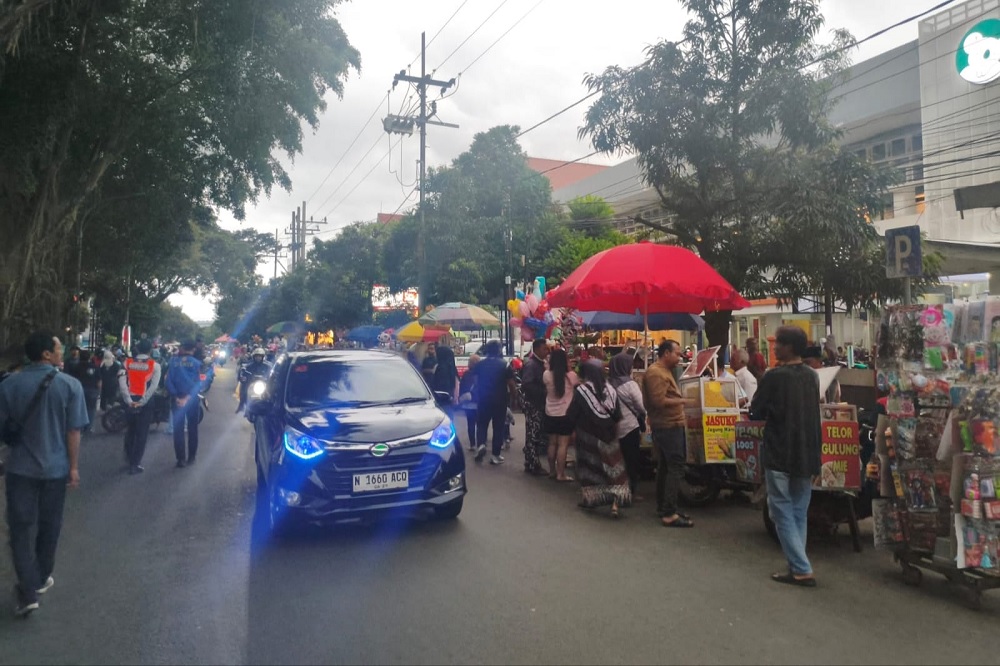
Malang, en.SERU.co.id – The Malang City Transportation Agency (Dishub) has completed its scheme for organizing street vendors (PKL) and traffic flow in preparation for Lebaran. The main focus is the Jalan Merdeka Selatan area, where trials have now concluded successfully.
Head of Dishub Kota Malang, Drs. Widjaja Saleh Putra (known as Jaya), explained that the PKL arrangement will continue using the roadway without closing access. Placement of vendors and parking areas remains the same as during the trial period.
“For Saturdays, PKL will be positioned on the north side, closer to the Alun-Alun, while parking stays in front of the Post Office,” Jaya stated on Tuesday, March 3, 2026.
He noted that future PKL organization needs to be more extensive, including encouraging collaboration with vendors in the Jalan Agus Salim and Jalan Merdeka Barat areas.
“Overall, traffic flow and PKL arrangements can already be accommodated. Improvements are still needed in services, product variety, and neatness,” he added.
Traffic volume in the area remains relatively manageable, but visits to Alun-Alun and the Kayutangan Heritage area are expected to rise significantly during Ramadan and after Lebaran.
“This could increase congestion on Jalan Merdeka Selatan. Since traffic is dynamic, full closures may be implemented if conditions become extremely crowded,” he emphasized.
Preparing for Lebaran 2026 Mudik
Beyond the Jalan Merdeka Selatan setup, Dishub is also readying measures for the 2026 Lebaran mudik (homecoming exodus) or Idul Fitri 1447 H. This aligns with national cross-sectoral coordination meetings led by the National Police Chief, including heavy vehicle restrictions under a joint decree from the Transportation Minister and Police Chief.
Jaya said national community movement during Lebaran 2026 is projected at around 143.9 million people — lower than last year’s forecast of 163 million (with actual realization about 150 million, though recent updates cite 143.9 million as the current estimate, down from 146.4 million in 2025).
“For Malang City, inbound and outbound mobility is expected to decline by about 1.75%, influenced by rainy season factors and people’s tendency to cut travel costs,” he explained.
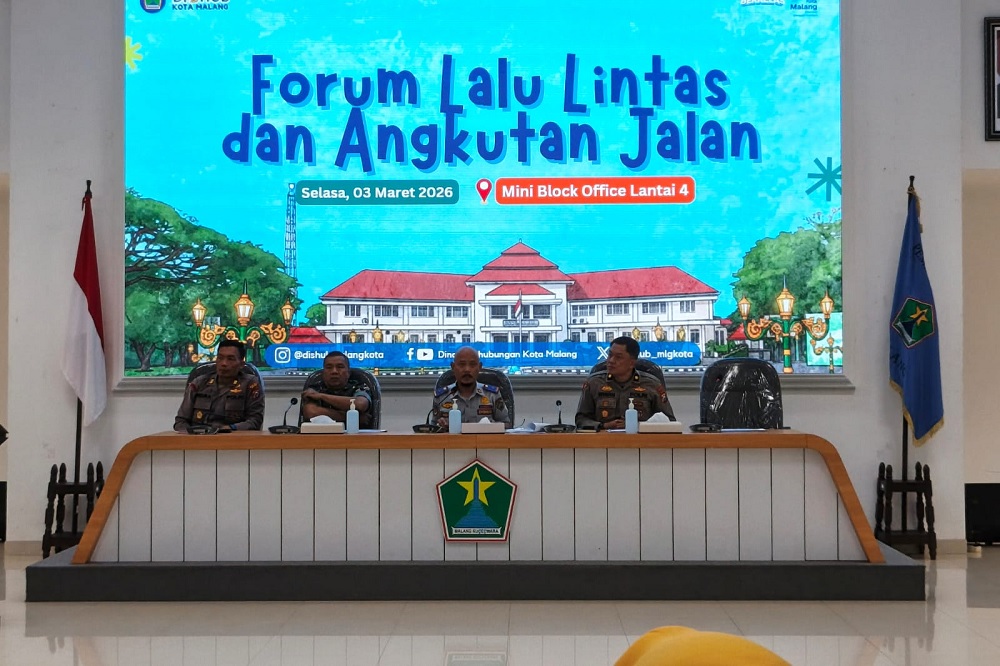
Dishub predicts mudik peaks in two waves: the first from March 13–15, and the second from March 18–19, due to overlapping major holidays like Nyepi and Idulfitri. Return flows (arus balik) are still awaiting further timeline developments.
Traffic engineering will be situational — no fixed policies like total road closures or contraflow unless on-site conditions demand it.
“Malang is both a destination and transit city toward Batu, Malang Regency, and Blitar. So adjustments depend heavily on the situation,” Jaya clarified.
Key Congestion Hotspots Identified
Dishub has mapped several high-risk congestion points during the mudik and Lebaran holiday period, divided into commercial/service centers and major road segments.
Commercial hotspots include MOG, Pasar Besar, Ramayana, Trend, souvenir centers, and Matos. Vulnerable roads cover Jalan Raden Intan, Gatot Subroto, Kacuk area, Ahmad Yani, Borobudur up to MCC, and toward Sengkaling.
Peak tourist visits to Malang City are anticipated after Lebaran, based on patterns from previous holiday evaluations, including Christmas and New Year periods. (bas/rhd)