
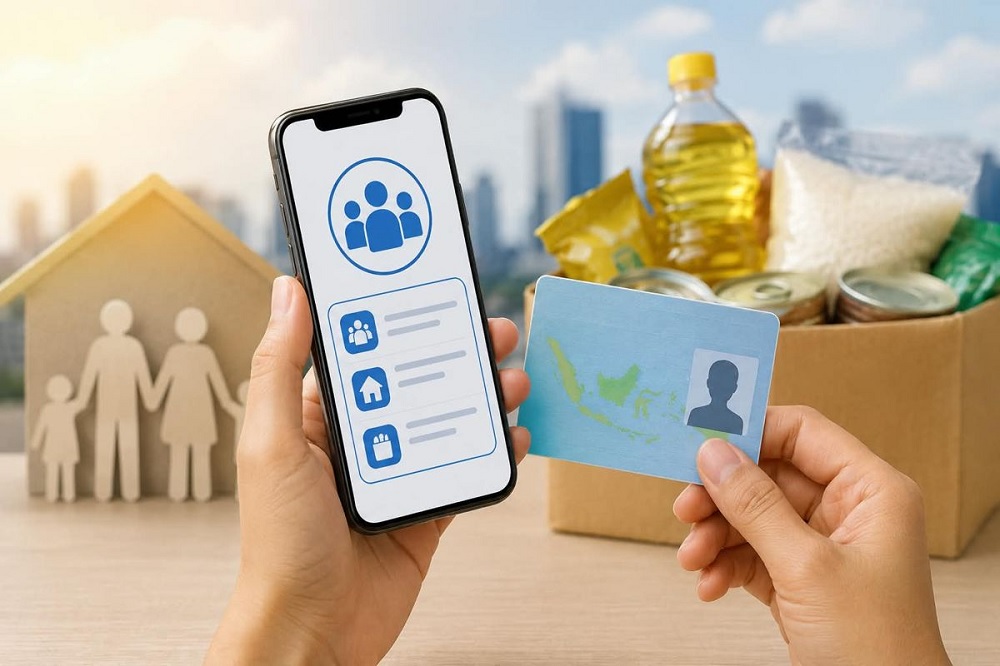
Jakarta, en.SERU.co.id – Indonesians can now check their family’s socio-economic ranking, known as desil, in the National Socio-Economic Single Data (DTSEN) online. The same check also shows whether a household is recorded as a social assistant (Bansos) recipient in the system. All that is needed is a National Identity Number (NIK) through the official Cek Bansos website or mobile app run by the Ministry of Social Affairs (Kemensos).
The desil information places a family within one of ten socio-economic groups based on government data. It also helps people monitor whether they remain listed as Bansos recipients.
Checking can be done entirely online with an NIK, so there is no need to visit a government office. The process works on a mobile phone browser or through the dedicated app.
How to check via the website
- Open a browser on your phone.
- Go to the official Cek Bansos Kemensos website.
- Enter the NIK exactly as it appears on your KTP.
- Fill in the verification code or captcha.
- Tap “Cari Data”.
- Wait for the system to display the results.
The results show registered family data, including the desil group and, when available, social assistance status.
How to check via the Cek Bansos app:
- Download and open the Cek Bansos app.
- Select the Bansos check menu.
- Enter the NIK as shown on the KTP.
- Tap “Cari Data”.
- Review the information displayed.
The app may show recipient details, desil category, type of assistance, acceptance status and the relevant assistance period, depending on the data available in the system.
What desil 1 to 10 means
Desil groups range from 1 to 10. A lower number indicates a relatively lower socio-economic position in the ranking. A higher number points to a relatively higher position.
Desil status is not the same as Bansos eligibility. A particular desil group does not automatically mean a family will or will not receive assistance. Each government program has its own criteria, requirements and selection process. The desil figure should be treated as a general picture of a household’s place in the official socio-economic data, not as a guarantee of benefits.
Read Also:
BPNT Stage Three 2026 Distribution Reaches More Than 12 Million Families
Why a family’s desil can change
A desil ranking is not permanent. It can shift when the government updates, verifies or validates socio-economic data. Changes in a family’s own circumstances also affect the ranking. These may include a change in employment, the number of household members, ownership of assets, income level or other socio-economic factors.
Such updates can also alter Bansos recipient status. A household that previously appeared as a recipient may see that status change after the data is refreshed.
Regular checks are useful, especially for people who want to confirm that their family information still matches current conditions. It is also wise to make sure population and socio-economic data remain accurate and up to date. (aan/mzm)