

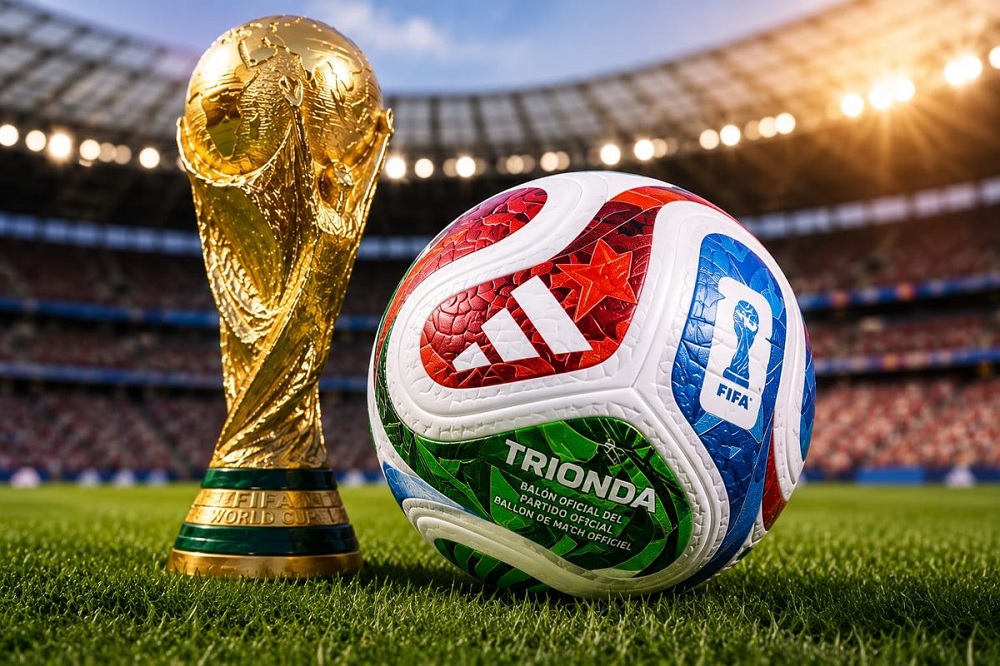
Madiun, Indonesiam, en.SERU.co.id — Social media buzzed with excitement when images of the Adidas Trionda ball for the 2026 FIFA World Cup appeared to show a “Made in Indonesia” label. However, the reality is more nuanced.
PT Global Way Indonesia (GWI) in Madiun, East Java, does manufacture Trionda balls, but only the commercial replicas and souvenir versions sold to fans, not the official match balls used in the tournament.
Desy, Person in Charge at PT GWI, confirmed the factory’s role in producing the balls.
“Yes, it’s true that PT GWI produces them. Production is already complete because the balls have been used,” she told detikcom on Monday (20/7/2026). She declined to reveal production numbers or contract details, citing internal company policy.
Adidas Clarifies: Two Different Production Lines
Senior Manager of Brand Activation at Adidas Indonesia, Cinita Dewi Mayakatri, was clear on the distinction. The official match balls, including those used in the final, are not made in Indonesia.
“The official match balls have different specifications from those sold to the public. The ones used in matches, including the World Cup final, are not from Indonesia. What is produced here are the consumer versions,” she explained.
This dual production approach explains the “Made in Indonesia” label seen in leaked images. It applies only to the replica and retail versions.
Official Balls Made in Pakistan
For the fourth consecutive World Cup, Adidas has entrusted official match ball production to Forward Sports in Sialkot, Pakistan. The company previously manufactured the Brazuca (2014), Telstar 18 (2018), and Al Rihla (2022) balls.
Pakistan’s government even showcased the Trionda at the United Nations on July 17, 2026, highlighting it as high-value handmade craftsmanship from the country that “unites the world through sport.”
Read Also:
FIFA Confirms 2026 World Cup Final on July 19 Despite New York Wildfire Smoke
Same Pattern as Qatar 2022
This isn’t new. During the 2022 World Cup in Qatar, PT GWI in Madiun also produced commercial versions of the Al Rihla ball, while the official match balls were made in Pakistan.
The match balls feature cutting-edge technology to support refereeing decisions. An Inertial Measurement Unit (IMU) sensor embedded in one panel tracks acceleration, rotation, and every touch of the ball up to 500 times per second.
This data integrates with Semi-Automated Offside Technology (SAOT) and AI systems, helping Video Assistant Referees (VAR) make more accurate calls on offside and handball situations.
While Indonesia plays a role in bringing the Trionda to fans worldwide through its replica production, the balls lighting up the pitches in 2026 will carry the expertise of Pakistan’s skilled manufacturers. (aan/rhd)
Indonesian Version:
Benarkah Bola Adidas Trionda Piala Dunia 2026 Diproduksi di Madiun? Ini Fakta Sebenarnya