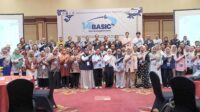

Malang, en.SERU.co.id – World Water Monitoring Day 2026 served as a platform for knowledge exchange between Universitas Brawijaya (UB), the National Research and Innovation Agency (BRIN), and the International Hydrological Programme (IHP) of UNESCO Indonesia. One of the key discussions addressed the critical threat to water absorption in the Brantas River Basin in Malang during the International Knowledge Sharing Forum, part of the International Water Innovation Series.
UB Rector Prof. Widodo SSi MSi PhD MedSc stated that water sustainability is one of the global challenges. It requires a multidisciplinary approach, international collaboration, and science-based innovation.
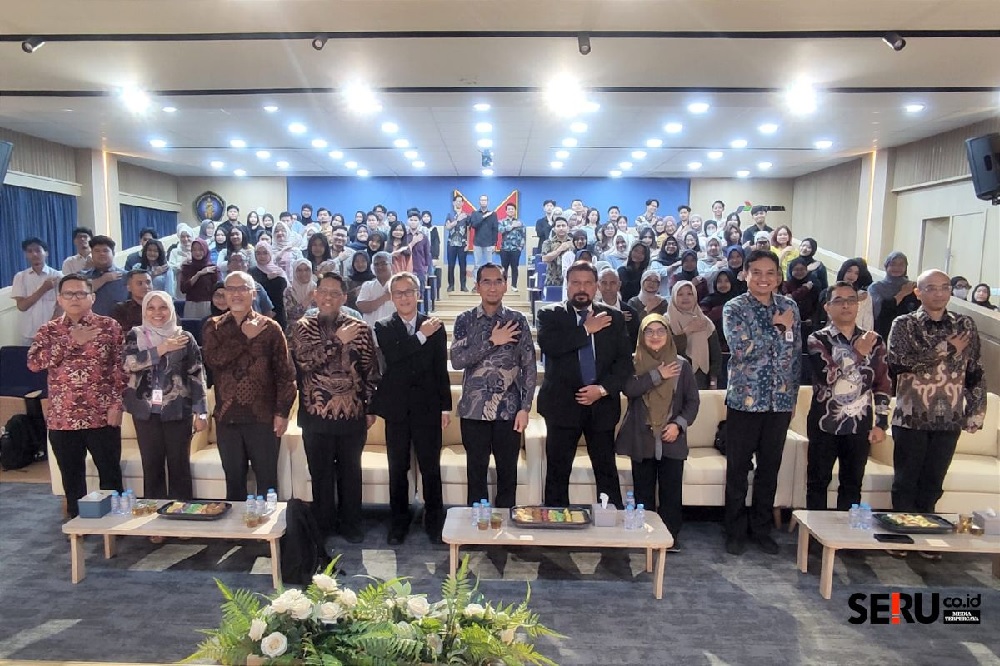
“Water is a fundamental resource that supports human life, ecosystem sustainability, food security, and economic development. Therefore, monitoring water quality and quantity, data-based management, and the development of innovative technologies are important aspects in facing the challenges of climate change and environmental degradation,” said Prof. Widodo at the Pertamina Auditorium, 2nd Floor of the Mechanical Engineering Building, Faculty of Engineering UB, on Friday, 25 September 2026.
He noted that the organization of World Water Monitoring Day 2026 provides an important momentum to strengthen cooperation networks among universities, research institutions, government, industry, and the community. Partners such as UB, BRIN, UNESCO, the Malaysian Water Association (MWA), and others work together to create sustainable water management solutions.
“Universitas Brawijaya is committed to continuing its contribution to water sustainability issues through education, research, innovation, and international cooperation. This commitment is in line with UNESCO’s efforts to promote sustainable water resource management, as well as the achievement of Sustainable Development Goal 6 (SDG 6) on Clean Water and Sanitation,” he added.
The UB Rector expressed his concern over the conversion of water catchment areas in Malang that have largely shifted into residential zones and agricultural land. According to him, this condition has caused a decrease in groundwater volume and the gradual drying up of springs and rivers around the Brantas River Basin (DAS Brantas).
“The conversion of catchment land into agricultural fields and housing in Malang has drastically reduced water absorption. Without retention facilities, drought will threaten. Conservation policies from the local government are urgently needed to maintain water availability as the main source of life,” said Prof. Widodo.
He viewed the event as a means of education and a push for concrete action against the increasingly drastic decline in water absorption in the Greater Malang area due to land conversion. He also highlighted the importance of long-term development planning for the next 50 to 100 years, drawing lessons from water management practices in advanced countries such as Japan.
International Knowledge-Sharing Session
The International Knowledge-Sharing session featured:
- Prof. Dato’ Dr. Nor Azazi Zakaria, Chairholder of the UNESCO Chair on Ecohydraulics for Sustainable Water Infrastructures for SDG 6 in Asia and the Pacific from Universiti Sains Malaysia.
- Dr. Luki Subehi MSc, Head of the Research Center for Limnology and Water Resources at BRIN.
The two speakers brought together international and national perspectives on the challenges of water resource management. Approaches involving ecohydraulics, nature-based solutions, limnology, and water resource management formed part of the discussion, enriching knowledge development and the capacity of academics and participants in facing increasingly complex water resource issues.
The knowledge exchange format played an important role in building communication and networks between participants and the academics, researchers, and practitioners involved in water issues.
Prof. Dato’ Dr. Nor Azazi Zakaria
As Chairholder of the UNESCO Chair on Ecohydraulics for Sustainable Water Infrastructures for SDG 6 in Asia and the Pacific from Universiti Sains Malaysia, Prof. Dato’ Dr. Nor Azazi Zakaria presented the topic “Ecohydraulics and Nature-Based Solutions for Sustainable Water Management.”
“The material discusses the ecohydraulics perspective and nature-based approaches in supporting the management and infrastructure of sustainable water resources,” said Prof. Dato’.
The UNESCO Chairholder in Water Resources outlined the Integrated Water Resources Management (IWRM) framework, which emphasizes four main targets:
- adequate water availability,
- guaranteed clean water,
- flood management, and
- protection of the surrounding environment.
“We urge the importance of Demand Management, namely the efficiency of treated water use so that it is not wasted on non-consumptive activities such as watering plants or washing vehicles,” he stressed.
Dr. Luki Subehi MSc
As Head of the Research Center for Limnology and Water Resources at BRIN, Dr. Luki Subehi MSc delivered the topic “Limnology and Sustainable Water Resources Management.”
“This discussion provides a perspective on limnology, freshwater ecosystems, and water resource management, certainly supported by research and scientific data,” said Dr. Luki.
Dr. Luki emphasized that continuous (time-series) monitoring of water quality and quantity is crucial yet often neglected.
“BRIN itself has prepared a Strategic Innovation Research (RIS) program targeting critical river basins in East Java, particularly the Brantas River Basin, through comprehensive research and the provision of monitoring stations,” he explained.
Read Also:
Universitas Negeri Malang Explores Academic Partnership with UNIMIB Italy
Organization of World Water Monitoring Day 2026
World Water Monitoring Day 2026 was organized by Globalizing UB under the program of Vice Rector IV of Universitas Brawijaya, Prof. Andi Kurniawan SPi MEng DSc. He also serves as Deputy Chair II for Water Education and Capacity Development on the National Committee of the International Hydrological Programme (IHP) UNESCO Indonesia.
“The Programme Overview of World Water Monitoring Day 2026 provides an overview of the activities and the direction of cooperation development in the field of water resources. At the same time, it reflects UB’s efforts to strengthen academic and research cooperation internationally, particularly in water education, capacity development, technological innovation, and water resource management,” explained Prof. Andi.
Prof. Andi Kurniawan’s involvement in the event also represents UB’s position in the network of water education and capacity development at both national and international levels. This position forms part of the network and the strengthening of UB’s role in promoting water education, capacity development, research, innovation, and international collaboration in the field of water resources.
“Through this network, UB encourages the strengthening of higher education’s contribution in responding to global challenges related to water resources,” said Prof. Andi.
This commitment is in line with the agenda of Sustainable Development Goal 6 (SDG 6): Clean Water and Sanitation, by placing water and sanitation management as an important part of sustainable development.
“World Water Monitoring Day 2026 through Globalizing UB continues to expand the space for collaboration with various partners at the national and international levels. It is expected to become part of strengthening UB’s role in the fields of water education, capacity development, research, and innovation,” he concluded. (rhd)