

Jakarta, en.SERU.co.id – The trend in naming gamis (long Muslim dresses) leading up to Eid al-Fitr 2026 has sparked widespread discussion, particularly with the emergence of terms like “gamis bini orang” (roughly “someone else’s wife gamis”) and “gamis istri sah” (“legal wife gamis”). These quirky names have gone viral on social media, to the point where many shoppers now ask for them directly by these names in stores. Experts view the phenomenon as carrying social implications while also serving as a clever marketing strategy in the social media era.
Origin of the Term “Gamis Bini Orang”
The term “gamis bini orang” is not an official product name. The design was originally known as the “Gamis Inara,” inspired by the elegant, loose-fitting gamis style frequently worn by influencer Inara Rusli.
Traders in shopping centers like Tanah Abang then playfully twisted the name into “gamis bini orang,” largely because the model is seen as suitable for a mature, sophisticated, and elegant look. This catchy renaming quickly spread across social media.
TikTok videos using the term helped fuel its virality, and soon buyers started arriving at stores asking for it by that name directly.
Characteristics of “Gamis Bini Orang”
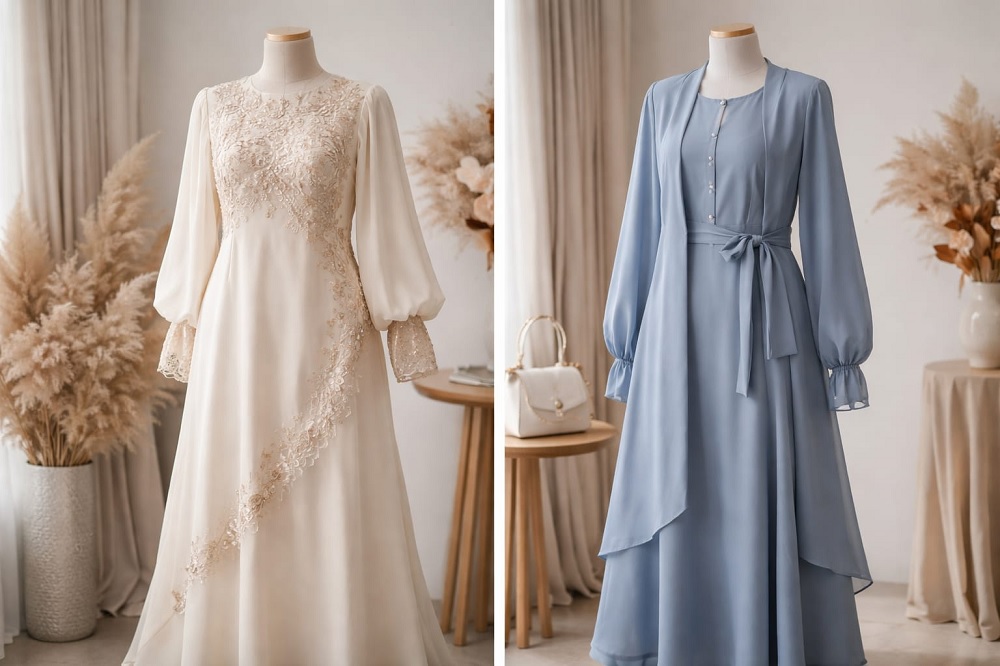
Design-wise, this model isn’t drastically different from previous modest wear collections. However, several distinctive features make it easily recognizable:
- Soft, flowing tencel fabric that drapes beautifully,
- Front panel combined with brokat (brocade),
- Curved brokat cut at the bottom, creating a sharp silhouette,
- Balloon or trumpet sleeves,
- Relatively minimalist design despite the brokat details,
- Soft color palette such as butter yellow, milky brown, and broken white.
Retail prices for this model range around Rp300,000 per piece, or about Rp275,000 when bought in bulk (kodi). It is said to be most popular among young women and young mothers.
What Is “Gamis Istri Sah”?
Alongside “gamis bini orang,” the term “gamis istri sah” has emerged as a milder, more refined alternative. It refers to a gamis model that gives an impression of elegance and formality. This version has slightly different characteristics, especially with added layering for a neater appearance.
Key features include:
- A long vest/rompi integrated with the gamis,
- The rompi can be fastened with buttons or ties and is removable,
- More elegant layered look,
- Varied color options, from black and pastels to denim blue.
Plain models without beads range from Rp125,000–Rp150,000, while chiffon versions with bead details can reach up to Rp200,000.
The Naming Raises Problematic Messages
University of Indonesia lecturer Asri Saraswati believes these terms carry potentially problematic messages toward women. She argues that labels like “bini orang” or similar ones (e.g., “pride of the in-laws”) can evoke certain stereotypes.
“These create an image of women having to compete with one another to attract attention from others. It implies women dress to impress someone else, rather than as a form of self-expression,” Asri stated, as quoted from Wolipop on Sunday (March 15, 2026).
That said, she acknowledges that such creative naming reflects linguistic ingenuity in marketing. In the digital trading context, catchy words help sellers quickly convey a product’s character to potential buyers, especially on platforms like TikTok or Shopee Live.
Marketing Strategy in the Social Media Era
Prof. Akh Muzakki, Rector of Sunan Ampel State Islamic University in Surabaya, views the phenomenon through a marketing lens. He explains that the trend’s success ties into the concept of product differentiation.
“Product differentiation is a marketing strategy that highlights strong differences from other products in the market. Without such distinction, consumers tend to remain loyal to familiar, established products,” he said.
Muzakki added that differentiation doesn’t always require creating something entirely new. Differences can stem from existing elements but repackaged in a fresh way to create a unique identity.
A Seasonal Trend Ahead of Eid
Fashion observer and designer Lisa Fitria believes this trend is likely temporary. She notes that it emerges due to the momentum leading up to Eid, when interest in Muslim clothing surges dramatically.
“Unique gamis naming trends like this typically last only through the pre-Eid period and fade afterward,” she concluded. (aan/rhd)