
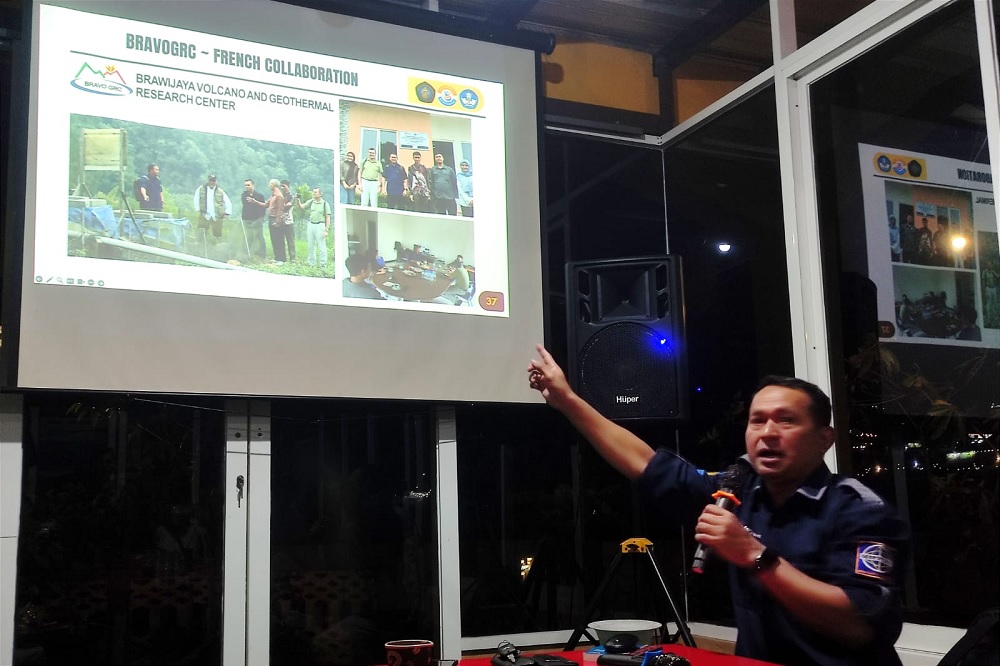
Malang, en.SERU.co.id – Increasing public literacy and understanding of geothermal energy utilization is essential for advancing the development of Geothermal Power Plants (PLTP). Moreover, utilizing just 10–20% of geothermal resources can significantly mitigate the risks of earthquakes and volcanic eruptions.
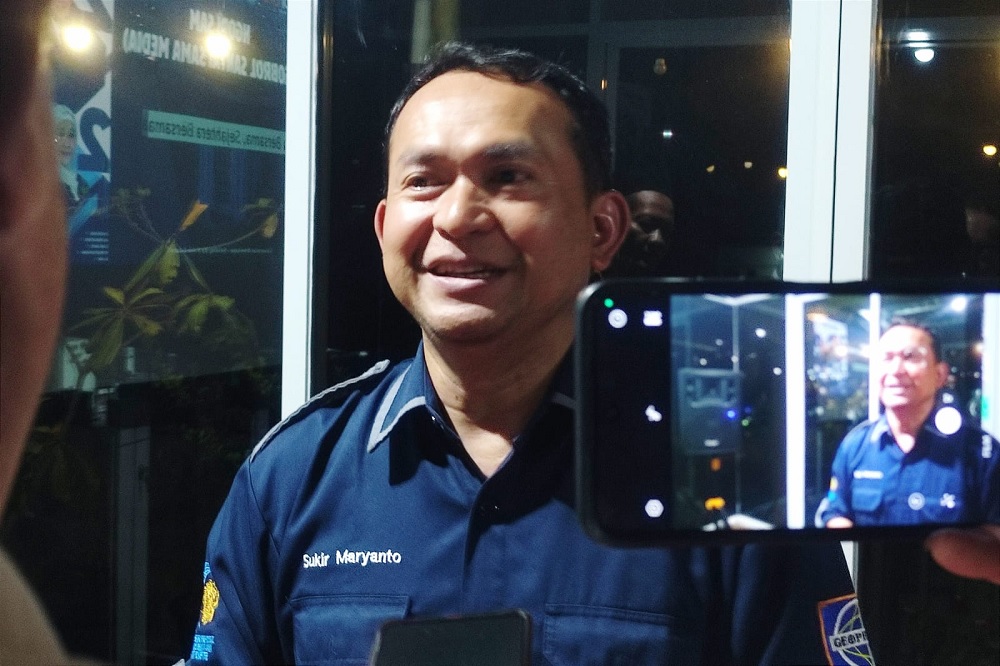
Prof. Ir. Sukir Maryanto, S.Si., M.Si., Ph.D., Dean of the Faculty of Mathematics and Natural Sciences (FMIPA) at Universitas Brawijaya (UB), explained that Indonesia lies along the Ring of Fire, home to hundreds of active volcanoes that store vast geothermal energy reserves interconnected through fault systems.
“The resistance to geothermal development in Indonesia stems not from technological limitations, but from insufficient public education and literacy on geothermal science. This challenge has resulted in only a few universities in Indonesia seriously pursuing geothermal studies academically. However, UB stands out as the only institution bold enough to specialize in this field, complete with a dedicated field laboratory in Cangar, nestled between Mount Welirang, Mount Arjuno, and Mount Panderman,” said Prof. Sukir—affectionately known as Prof. Sukir—during the casual media discussion “Ngopi Sam” (Ngobrol Santai Sama Media) at Warung Bu Sukir.
He emphasized that improving geothermal literacy should be a government priority, involving all stakeholders through a pentahelix approach: government, academia, industry, communities, and the media.
“The government should implement a comprehensive, large-scale public education program on geothermal energy, including its role in disaster risk reduction. There are numerous success stories from existing PLTP projects in Indonesia—initial investments may be high, but these plants continue to operate profitably and benefit all parties involved,” said the professor specializing in volcanology and geothermal studies.
The Imperative of Long-Term Education: A Societal Duty
He acknowledged that education cannot be achieved instantly and requires a long-term process. Nevertheless, providing information and protection to the public is a fundamental obligation of the state, not something that should fall solely on individuals or specific institutions.
“We have started by introducing geothermal education to preschool and kindergarten children. Keeping the lessons simple and engaging has sparked interest among parents and village officials as well,” he shared.
Geothermal utilization should not be viewed narrowly as mere resource extraction but must also consider its disaster mitigation benefits. A single PLTP can deliver wide-ranging advantages to communities living near volcanoes, through both indirect and direct uses of geothermal energy.
“Indirect use involves power generation, where steam drives turbines to produce electricity. Direct use, on the other hand, can be applied in various sectors, such as distilling essential oils, drying timber and agricultural products, managing greenhouses, and supporting smart farming initiatives,” he elaborated.
Indonesia boasts significant geothermal potential across multiple regions, including Lahendong (Sulawesi), Kamojang and Darajat (West Java), Dieng (Central Java), Ijen and Kawah Wurung (East Java), Ulubelu (Lampung), Sarulla (Sumatra), as well as areas in Aceh and other parts of Sulawesi.
“Other success stories come from developed countries like Japan, where geothermal energy is used for space heating, agricultural irrigation, and even snow melting. In Hawaii, despite its extreme volcanic activity, geothermal energy serves as a reliable electricity source while helping to reduce earthquake risks,” he noted.
Prof. Sukir also revealed ongoing international collaborations with groups from countries sharing geothermal potential, including Ranau and Johor Bahru in Malaysia, CMB in Sri Lanka, HVD in Mongolia, Ashibeten in Japan, Australia, and others. (rhd)