

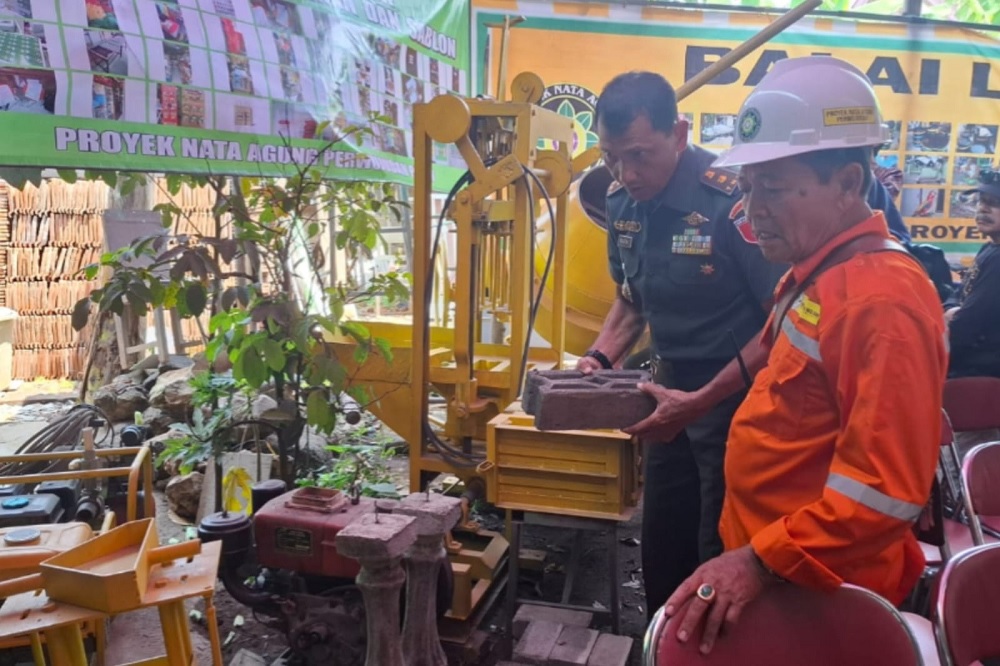
Malang, en.SERU.co.id – At the age of 74, Bambang Mangku Bagyo, a resident of Jenggolo Village, Kepanjen District, Malang Regency, has established a new Vocational Training Center (Balai Latihan Kerja/BLK) called BLK Karoseri Jenggolo Baru.
This initiative stems from his noble intention to support the government’s efforts in poverty alleviation by improving the quality of human resources and fostering self-reliant individuals.
The elderly man, who serves as Project Leader of Nata Agung Perwujudan Pusat, explained that the establishment of this BLK is a concrete expression of his concern for enhancing workforce quality. Especially in Java, an area that has long attracted interest from entrepreneurs outside the island.
The center is also expected to help expand employment opportunities and encourage the emergence of independent entrepreneurs.
“The demand for skilled workers from Java and outside Java is enormous,” said Bagyo (his familiar nickname).
“Even if some trainees don’t become employees later on, we can guide them to become independent business owners instead of just workers,” he added.
Bagyo explained that trainees will be equipped with three essential skill sets considered highly important in today’s job market:
- Business management
- Technical karoseri skills
- Targeted and up-to-date marketing strategies
“Our main focus is employability. We don’t only prepare participants to become employees. We also train them to be capable of running their own businesses and becoming self-employed,” he emphasized.
According to Bagyo, there is currently very high demand for skilled karoseri workers, especially from Kalimantan. Therefore, trainees will be groomed according to their individual interests and abilities, ensuring they are ready to enter the workforce directly.
He is confident that with the training approach applied at BLK Karoseri Jenggolo Baru, graduates will be well-equipped to meet current market needs.
Bagyo also confirmed that the training center is open to the general public, including anyone seeking work. The entire program is provided free of charge and follows a learn-while-working concept. During the apprenticeship period, participants will even receive a modest allowance. (wul/ono)