
Jakarta, en.SERU.co.id – Iran’s threat to fully close the Strait of Hormuz has sparked fresh tensions in the ongoing Middle East conflict. US President Donald Trump responded with warnings of far more devastating retaliatory strikes. In response to the situation, Indonesian President Prabowo Subianto urged Indonesians to remain vigilant and prepare for economic hardships stemming from the war.
Iran-US-Israel War Continues to Escalate
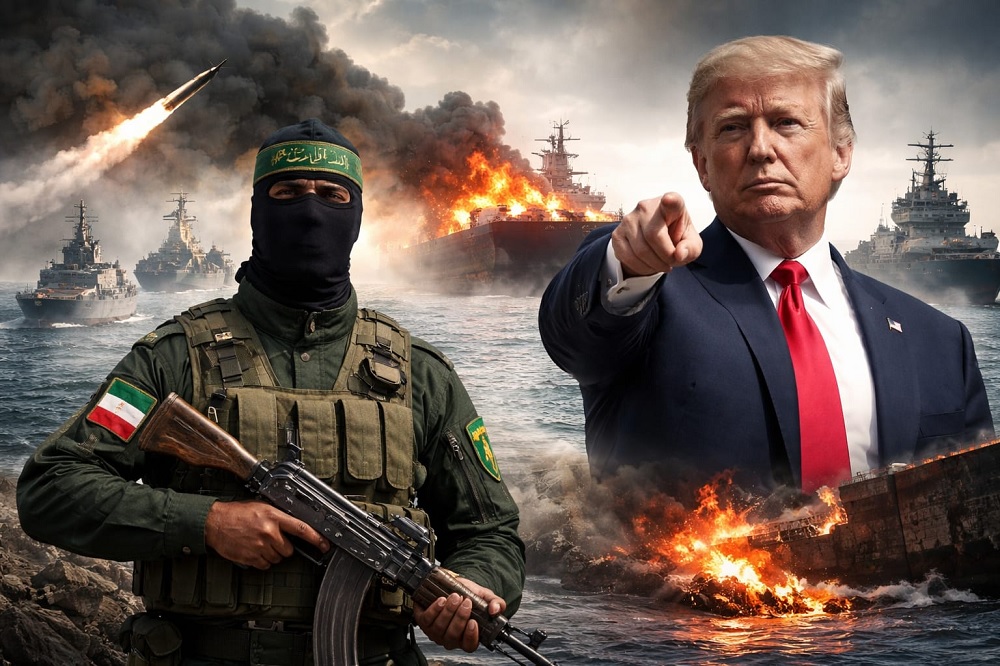
The Islamic Revolutionary Guard Corps (IRGC) declared its readiness to blockade oil shipments through the Strait of Hormuz. An IRGC spokesperson, speaking through Iranian state media, emphasized that Iran holds full control over the course of the ongoing conflict.
“We are the ones who will determine the end of this war, including decisions on navigation access in the Strait of Hormuz,” the spokesperson declared, as quoted by CNBC on Tuesday, March 10, 2026.
Iran reiterated that no oil would be allowed to leave the Middle East region as long as US-Israeli military attacks persist. Tensions have heightened further following reports of Mojtaba Khamenei being appointed as Iran’s new Supreme Leader—a move signaling Tehran’s unwillingness to soften its stance amid the conflict.
In response to these threats, US President Donald Trump stated that Washington is prepared to launch much larger counterattacks, particularly if Iran disrupts global oil distribution routes.
“Iran will face strikes twenty times harder than before. The United States can destroy various strategic Iranian targets that are easily crippled. Death, fire and fury will reign upon them,” Trump posted on his Truth Social platform.
Prabowo Urges Public to Prepare for Economic Impacts
Indonesian President Prabowo Subianto reminded citizens to brace for the economic consequences of the Middle East conflict. He stressed that the government cannot ignore potential difficulties arising from global instability.
“We must bravely confront hardships. We cannot pretend they do not exist,” Prabowo stated.
He also affirmed that he would provide a more detailed explanation to the public soon, particularly regarding the conditions Indonesia faces in the near term.
Meanwhile, several economists have begun assessing the potential effects of the conflict on the national economy. Some economists met with former Vice Presidents (10th and 12th) Jusuf Kalla in Jakarta to discuss emerging economic challenges due to the global situation.
In that meeting, Jusuf Kalla emphasized that Indonesia’s national economy is heavily influenced by global factors, past policies, and current government measures.
“The government still has room to intervene with current policies, especially when the State Budget (APBN) faces deficit pressure,” Kalla said, as reported by Tempo.
He recommended prioritizing productive programs that can drive economic growth and boost state revenues.
“MBG [Free Nutritious Meals Program] is important, purchasing defense equipment is important, cooperatives are important. But there are even more critical priorities. The government must determine what is most urgent,” Kalla added.
Signals of Budget Adjustments
The government is also considering potential adjustments to budgets for various national programs. Head of the National Nutrition Agency (BGN), Dadan Hindayana, stated that implementation of the MBG program will fully follow President Prabowo Subianto’s decisions.
This came in response to comments from Finance Minister Purbaya Yudhi Sadewa, who indicated the possibility of budget efficiencies if APBN pressures rise due to surging global energy prices—compounded by the rupiah’s sharp depreciation to Rp17,000 per USD.
According to Dadan, the BGN is ready to implement whatever decision the president makes regarding the program’s continuation. Previously, the BGN estimated the daily budget for the MBG program in 2026 at around Rp1.2 trillion. (aan/rhd)