

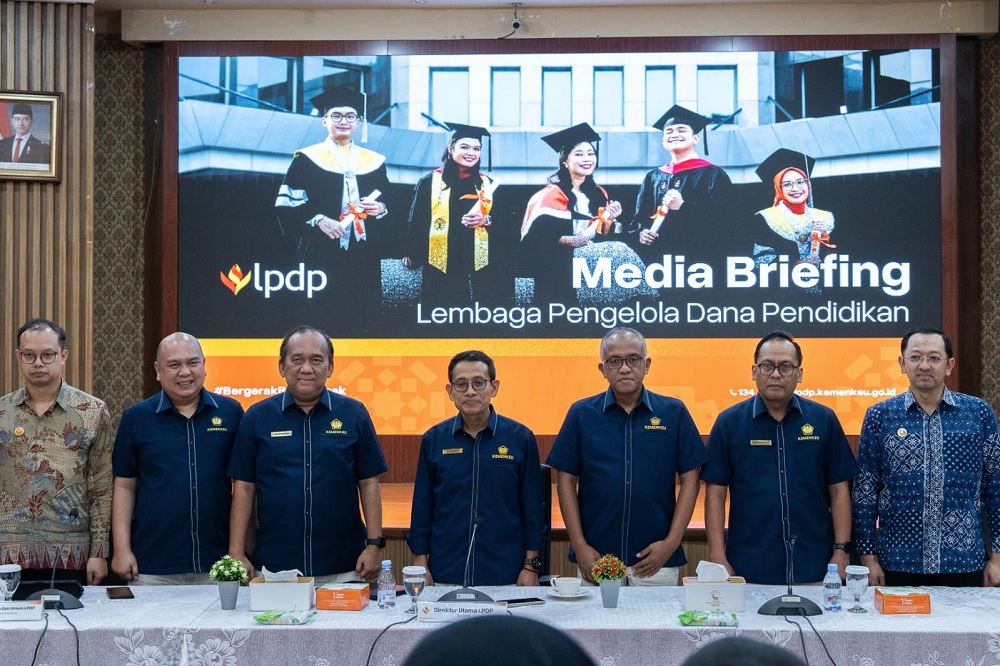
Malang, en.SERU.co.id – The Indonesian government’s policy prioritizing 80% of the LPDP (Lembaga Pengelola Dana Pendidikan, or Indonesia Endowment Fund for Education) scholarship quota for STEM fields (Science, Technology, Engineering, and Mathematics) from the 2021–2026 period—and reinforced for 2026—has sparked significant debate. This allocation aims to boost national innovation, economic competitiveness, and knowledge-based development, particularly in strategic sectors like food and maritime industries, energy, health, downstream processing (hilirisasi), manufacturing, defense, digitalization (including AI and semiconductors), and advanced materials.
LPDP Director General Sudarto has explained that this focus addresses global challenges, including Indonesia’s low researcher ratio and the urgent need to accelerate innovation-driven economic growth. The policy aligns with broader national goals, such as achieving Indonesia Emas 2045 (Golden Indonesia 2045), by producing highly skilled human resources capable of reducing technological dependence and advancing industrialization.
However, critics argue that overemphasizing STEM risks sidelining social sciences and humanities (often grouped under SHARE: Social Sciences, Humanities, Arts for People, Religious Studies, and Economics), which now compete for only about 20% of the quota. This could make opportunities in non-STEM fields far more competitive and potentially create imbalances in national development.
Experts like Prof. Wahyudi Winarjo, a sociology academic from Universitas Muhammadiyah Malang, view the debate as more than a technical education issue—it reflects the overall direction of national development.
He contends that development extends beyond economic growth figures and technological advancement to include shaping public ethics, collective awareness, and social cohesion.
Prioritizing STEM stems from an outdated paradigm that positions exact sciences as the primary engine of economic progress, while treating social sciences and humanities as mere supplements. A purely technocratic approach might produce technically excellent graduates but ones lacking social sensitivity.
Sustainable development, he argues, requires balancing scientific rationality with humanitarian values and moral dimensions; otherwise, it risks a crisis of national values and identity.
Similarly, Radius Setiyawan, a cultural and media studies expert from Universitas Muhammadiyah Surabaya, highlights the intensified competition for non-STEM scholarships. He criticizes the functionalist view of education as merely serving economic needs, which elevates certain disciplines over others.
Social sciences and humanities play crucial roles in fostering critical thinking and guiding national policy directions. Without humanistic perspectives, technological innovations could lose ethical, cultural, and social dimensions—elements essential for addressing complex development challenges effectively.
“By combining these two fields, innovative solutions and more comprehensive policies will be much easier to achieve—especially compared to prioritizing just one field alone,” Radius concluded. (aan/rhd)