
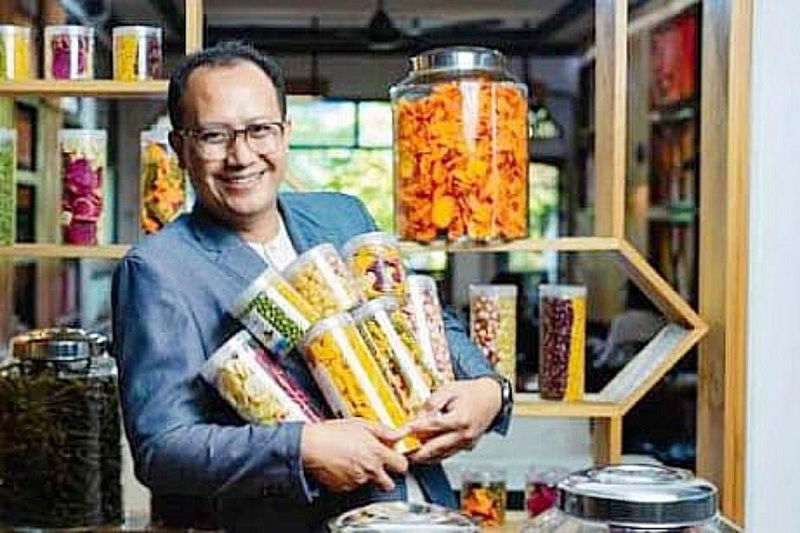
Batu, en.SERU.co.id – As Indonesia enters the lead-up to the Holy Month of Ramadan in 2026, small-scale producers of fruit and vegetable chips in Batu City are experiencing a significant influx of orders from across the country.
One prominent local artisan, Abdullah Dzikri, has recorded a notable surge in demand for his vacuum-fried products, with shipments now extending to distant regions such as Kendari in Southeast Sulawesi and Medan in North Sumatra.
Despite the sharp rise in market requests, Dzikri reports that his production capacity remains stable at normal levels. The trend underscores the growing potential of Batu’s creative culinary subsector, which continues to expand beyond its traditional role as a souvenir item.
“Orders have increased significantly, coming not just from East Java but from various parts of Indonesia,” Dzikri told SERU media.
“The farthest shipments right now reach Kendari and Medan. Demand for various vegetable and fruit chips is rising, but our production is holding steady at the usual volume,” he added.
A distinctive feature this season is the emerging integration of vegetable chips into the government’s Free Nutritious Meals (MBG) program. Vegetable chips are being considered as an alternative to fresh vegetables or rice in meal packages, particularly during Ramadan.
“The MBG menu can’t be consumed immediately during the day because students are fasting. Typically, these can be taken home by MBG recipients,” Dzikri explained.
He highlighted the key advantages of vegetable chips for the program: superior shelf life compared to perishable wet-processed vegetables, practicality for on-the-go consumption, and nutrient retention. Produced via vacuum frying, the chips preserve essential vitamins and meet nutritional standards.
Dzikri expressed hope that consistent raw material supplies from local farmers will remain reliable, enabling producers to meet the expanding market demand.
With this positive momentum, Batu’s vegetable chips are evolving from a regional specialty souvenir into a functional food product that supports national nutrition-strengthening initiatives.
The development highlights how local innovation in East Java’s highlands is aligning with broader government efforts to promote healthier, more accessible food options. (dik/mzm)