

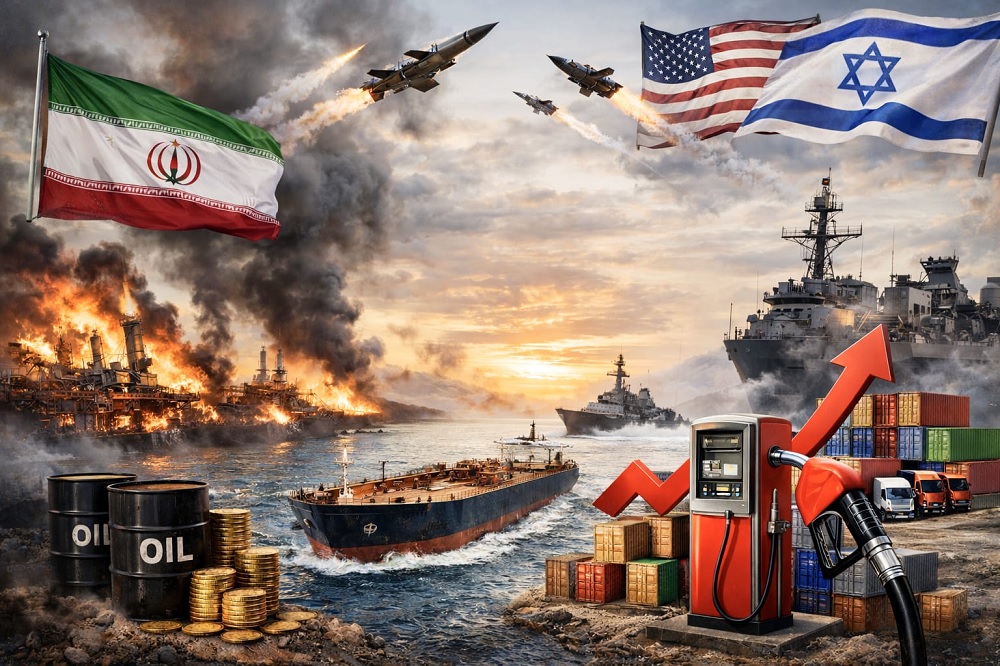
Jakarta, en.SERU.co.id – The intensifying armed conflict between Iran and the Israel-US alliance has triggered widespread concerns about global economic stability. Iran’s decision to close the Strait of Hormuz now poses a severe risk of sharp increases in worldwide energy prices. For import-dependent nations like Indonesia, this could translate into higher fuel (BBM) prices, elevated logistics costs, and mounting domestic inflationary pressure.
Israeli-US military operations have deliberately targeted Iran’s strategic assets, ranging from its nuclear program to ballistic missile facilities. Iran has responded with counterattacks and the dramatic closure of the Strait of Hormuz—the world’s most critical oil chokepoint.
This move has immediately fueled speculation of surging international crude oil prices. Approximately 20 million barrels of crude oil—nearly 20% of global daily consumption—pass through this narrow waterway each day. Indonesia, which still relies heavily on energy imports, is particularly vulnerable.
Fuel Prices and Logistics Costs Under Threat
Founder and CEO of Supply Chain Indonesia, Setijadi, forecasts that domestic diesel prices could rise by Rp750 to Rp2,000 per liter if the conflict persists. His projection is based on a moderate scenario of a US$25 per barrel increase in global oil prices, with the worst-case scenario reaching US$50 per barrel.
“This increase will directly pass costs through to the transportation and distribution sectors,” Setijadi explained. “Freight costs for goods are expected to climb by up to 12%. The effects will cascade into consumer goods prices, foodstuffs, and even construction materials.” (Quoted from Tempo, Sunday, March 1, 2026.)
Threats to Supply Chains and the Maritime Sector
Tensions in the Gulf region are already disrupting international shipping. Major global logistics companies such as CMA CGM have instructed their vessels to limit movements near the Strait of Hormuz. Similarly, PT Pertamina International Shipping (PIS) is actively working to evacuate its fleet from the area.
These developments signal potential major interruptions in international supply chains, particularly for energy and strategic imported goods. Should the Gulf route remain blocked, pressure on Indonesia’s national logistics system will become almost inevitable.
Domestic Warnings from Indonesian Leaders
Former Vice President of the Republic of Indonesia, Jusuf Kalla, has cautioned that the impacts of this conflict could be felt quickly and broadly. Beyond rising oil prices, he highlighted risks to global logistics flows and the safety of Indonesian citizens overseas.
“Our average BBM stocks are sufficient for only about three weeks,” Kalla stated. “If supplies from the Middle East are disrupted, the consequences will be severe.” (Reported by Garuda TV.)
Beyond a Mere Regional Conflict
Political and military observer from Universitas Nasional, Selamat Ginting, views this escalation as the definitive end of the “shadow war” between Israel and Iran. Direct US involvement has fundamentally altered strategic calculations and narrowed the threshold for further escalation.
“This is no longer a symbolic message,” Ginting concluded. “It is a demonstration of power that could drag both the region and the global economy into prolonged uncertainty.” (aan/rhd)